







Finance teams have never had more choices in how they structure and operate their finance functions. The global accounting software market reached USD 20.8 billion in 2025 and is projected to grow to USD 31.25 billion by 2030, growing at an annual rate of 8.4%, according to Grand View Research. Cloud-based platforms now dominate the market, while finance services, including managed and outsourced accounting, are its fastest-growing segment.
With this growth, the distinction between software and service is becoming less clear. Some companies prefer tools they can manage internally, while others would rather hand day-to-day finance operations to an external partner. This guide compares 14 of the best SaaS accounting services and tools for 2026, ranging from cloud accounting platforms to managed finance providers that handle bookkeeping and accounting end-to-end. The solutions differ a great deal, and there is no single right choice. It all depends on how your team prefers to work.
Top 14 SaaS Accounting Services and Tools for 2026: Comparison
| Company | Key services | Global presence | Employees | Year Est. |
|---|---|---|---|---|
| Helpware | Finance & accounting back office, bookkeeping, AP/AR, customer & technical support | USA, Mexico, Philippines, Ukraine, Georgia, Uganda, Puerto Rico, Poland, Germany, Albania (19 locations) | ~4,000 | 2015 |
| QuickBooks Online (Intuit) | Cloud accounting, invoicing, payroll, payments, tax | USA, Canada, UK, Australia, India and more (9 countries) | ~18,200 | 1983 |
| Xero | Cloud accounting, invoicing, bank reconciliation, payroll add-ons | New Zealand, Australia, UK, USA, Canada, Singapore, South Africa | ~4,610 | 2006 |
| Oracle NetSuite | Cloud ERP, financials, accounting, inventory, CRM | 200+ countries and territories | Not disclosed | 1998 |
| Sage Intacct | Cloud financial management, accounting, AP/AR, reporting | USA, Canada, UK, Australia, South Africa, France | Not disclosed | 1999 |
| FreshBooks | Cloud accounting, invoicing, expenses, time tracking, payments | Canada, USA, Netherlands (serves 160+ countries) | Not disclosed | 2003 |
| Zoho Books | Cloud accounting, invoicing, inventory, tax, automation | India, USA and offices in 80+ countries | ~17,000 | 1996 |
| Wave | Free accounting, invoicing, payments, payroll, bookkeeping advisors | Canada, USA (serves 200+ countries) | ~370 | 2009 |
| Pilot | Managed bookkeeping, tax, CFO services | USA (San Francisco, Nashville) | ~285 | 2017 |
| BILL | AP/AR automation, bill pay, spend & expense management | USA (serves businesses globally) | ~2,200 | 2006 |
| Ramp | Spend management, corporate cards, bill pay, accounting automation | USA (New York, Miami, San Francisco) | ~1,200 | 2019 |
| Puzzle | AI-native general ledger, real-time accounting for startups | USA (San Francisco) | Not disclosed | 2019 |
| Patriot Software | Online accounting and payroll for US small businesses | USA (Canton, Ohio) | ~180 | 2002 |
| 1-800Accountant | Virtual accounting, bookkeeping, tax, payroll, formation | USA (New York and offices) | ~343 | 2014 |
#1 Helpware

AI-powered, human-led finance and accounting operations company with a 90% CSAT score.
Most providers on this list sell software, but that’s not what Helpware does. Helpware manages the work itself. Founded in 2015 and headquartered in Lexington, Kentucky, Helpware delivers managed finance and accounting services globally through teams located across the USA, Mexico, the Philippines, Ukraine, Georgia, Uganda, Puerto Rico, Poland, Germany, and Albania. Its back-office and accounting support covers many of the time-consuming tasks that keep finance teams busy, including accounts payable and receivable, bookkeeping, invoice management, account setup, and medical billing. Automation handles repetitive processes, while experienced specialists manage the exceptions and judgment-based work.
Helpware is not a proprietary software distributor, and it works within existing systems. Its team of more than 4,000 professionals supports over 45 languages and integrates with platforms such as QuickBooks, Xero, NetSuite, and custom accounting environments. For SaaS and high-growth companies, that often means support tailored to subscription revenue models and customer data workflows instead of a one-size-fits-all approach.
Why we picked it
Helpware stands out for organizations looking for operational support rather than another software platform. According to the company data, Helpware clients have achieved back-office cost reductions of up to 50%. There are also reports of a 90% CSAT score, monthly attrition of 2.8% (an industry average is 6–8%), and client relationships that typically last more than five years.
- Services offered: Finance and accounting support (AP/AR, bookkeeping, invoicing), back-office operations, data entry, customer support, technical support, and CX consulting.
- Pros: Managed-service model instead of self-managed software. Potential cost savings compared with in-house teams. Strong retention and customer satisfaction metrics. SOC 2, HIPAA, and GDPR alignment. Compatible with existing accounting systems. Can scale from 5 to more than 500 FTEs within 90–120 days.
- Cons: Onboarding requires more planning than a self-service platform. Best suited to long-term operational support, not quick implementation.
- Industry expertise: SaaS and software, healthcare, ecommerce and retail, fintech, logistics, and gaming.
- Best for: Mid-market and high-growth companies seeking outsourced finance operations support.
- Pricing: Custom and quote-based. Clients report savings of up to 50% compared with in-house staffing.
- Year established: 2015.
- Location: Lexington, Kentucky (HQ), with operations across multiple global markets.
#2 QuickBooks Online (Intuit)
The accounting platform many US small businesses start with.
QuickBooks Online remains one of the most widely used accounting platforms in the United States. Developed by Intuit, its cloud-based version launched in 2002 and has become a go-to choice for small businesses and accounting professionals. Its popularity stems largely from its extensive ecosystem of integrations, banking connections, and accounting support.
Why we picked it
QuickBooks Online offers one of the largest networks of accountants, integrations, and educational resources available. Features such as automated transaction categorization and AI-assisted bank feeds help reduce manual bookkeeping tasks.
- Services offered: Cloud accounting, invoicing, expense tracking, payroll, payments, and tax preparation.
- Pros: Extensive accountant network and app ecosystem. Strong automation capabilities. Detailed reporting. Reliable mobile applications.
- Cons: As companies grow, additional users and advanced features can become expensive. Less flexible for highly customized workflows.
- Best for: US-based small businesses seeking a widely supported accounting platform.
- Pricing: Subscription-based with multiple tiers and periodic promotions.
- Year established: 1983 (Intuit).
- Location: Mountain View, California.
#3 Xero
Cloud accounting designed for collaboration and growing teams.
Founded in Wellington, New Zealand, in 2006, Xero was built around the idea that accounting software should be accessible from anywhere and easy to share with advisors. The platform now serves millions of customers worldwide and has established particularly strong positions in New Zealand, Australia, and the United Kingdom while continuing to expand in North America.
One of Xero’s biggest advantages is its approach to collaboration. Every subscription plan includes unlimited users, making it easier for business owners, finance staff, and external accountants to work from the same set of records. Businesses considering a switch should note that payroll functionality often relies on third-party integrations depending on location.
Why we picked it
Xero combines a user-friendly interface with strong collaboration features and a marketplace of more than 1,000 connected applications.
- Services offered: Cloud accounting, invoicing, bank reconciliation, expense claims, and payroll integrations.
- Pros: Unlimited users on all plans. Intuitive interface. Strong reconciliation tools. Large integration ecosystem.
- Cons: Payroll functionality varies by region. May be less suitable for organizations with extremely high transaction volumes.
- Best for: Growing small and mid-sized businesses that collaborate closely with external accountants.
- Pricing: Subscription plans with multiple pricing tiers.
- Year established: 2006.
- Location: Wellington, New Zealand.
#4 Oracle NetSuite
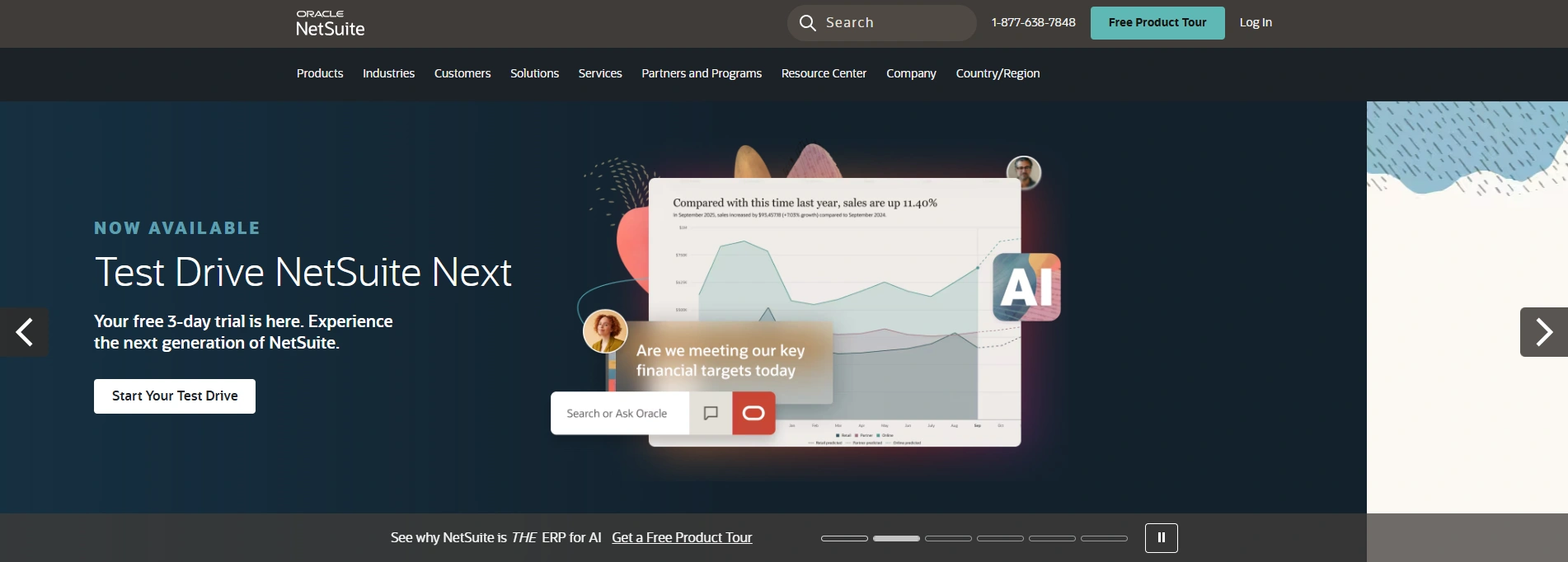
A cloud ERP platform for companies moving beyond small-business accounting software.
Back in 1998, NetSuite (then called NetLedger) was one of the earliest web-based accounting systems. Now it operates as part of Oracle and supports more than 42,000 organizations worldwide, combining accounting with broader business functions such as inventory management, CRM, ecommerce, and order management.
That breadth is one of NetSuite’s greatest strengths, but it also brings added complexity. Implementations require planning, and pricing is tailored to each organization. While it may be excessive for smaller businesses, it is often a natural fit for companies managing multiple entities, currencies, and operational systems.
Why we picked it
NetSuite helps growing organizations consolidate finance and operations within a single platform, reducing reliance on disconnected systems and manual reconciliation processes.
- Services offered: Cloud ERP, financial management, accounting, inventory management, order management, CRM, and ecommerce.
- Pros: Unified platform for finance and operations. Strong multi-entity and multi-currency capabilities. Scales effectively for larger organizations.
- Cons: Lengthier implementation process. Premium pricing. More functionality than most small businesses require.
- Best for: Mid-market and enterprise organizations with complex operational needs.
- Pricing: Custom annual licensing and per-user fees.
- Year established: 1998.
- Location: Austin, Texas.
#5 Sage Intacct
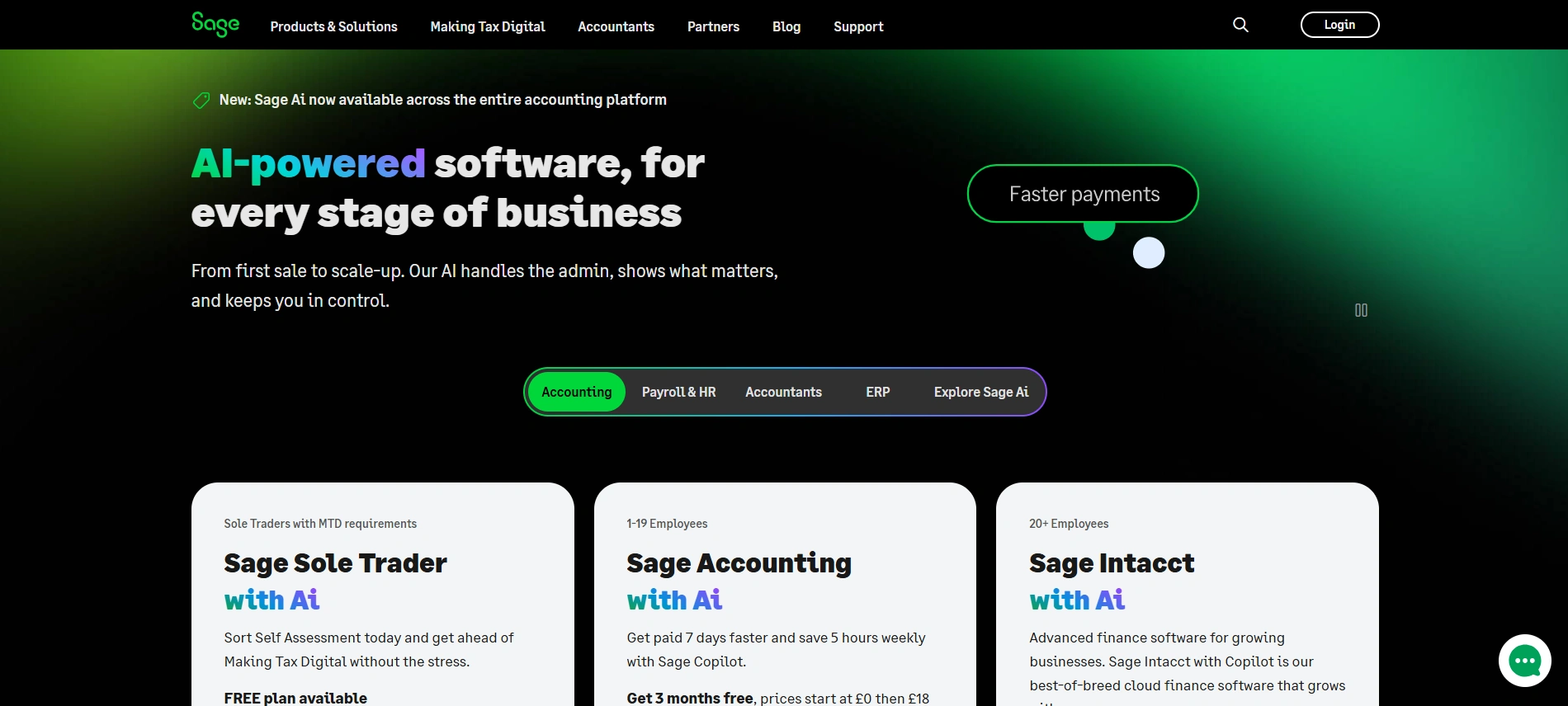
Financial management software built for accounting complexity.
Founded in 1999 and acquired by Sage Group in 2017, Sage Intacct is designed for organizations that have outgrown entry-level accounting tools. Its strengths lie in areas such as multi-entity accounting, dimensional reporting, automation, and financial visibility, making it a common choice among nonprofits, healthcare organizations, and SaaS companies.
Although pricing places it above many small-business solutions, finance teams often find the reporting and consolidation capabilities worthwhile as operations become more complex.
Why we picked it
Sage Intacct fills the gap between basic accounting software and a full ERP platform. Its dimensional reporting capabilities are especially useful for organizations that need to analyze performance across departments, entities, programs, or locations.
- Services offered: Cloud financial management, accounting, AP/AR, multi-entity consolidation, and reporting.
- Pros: Strong consolidation tools. Flexible reporting. Good automation capabilities. Backed by Sage.
- Cons: Premium pricing. More functionality than smaller businesses typically need.
- Best for: Mid-sized organizations, nonprofits, and SaaS companies with advanced reporting requirements.
- Pricing: Custom and quote-based.
- Year established: 1999.
- Location: San Jose, California.
#6 FreshBooks
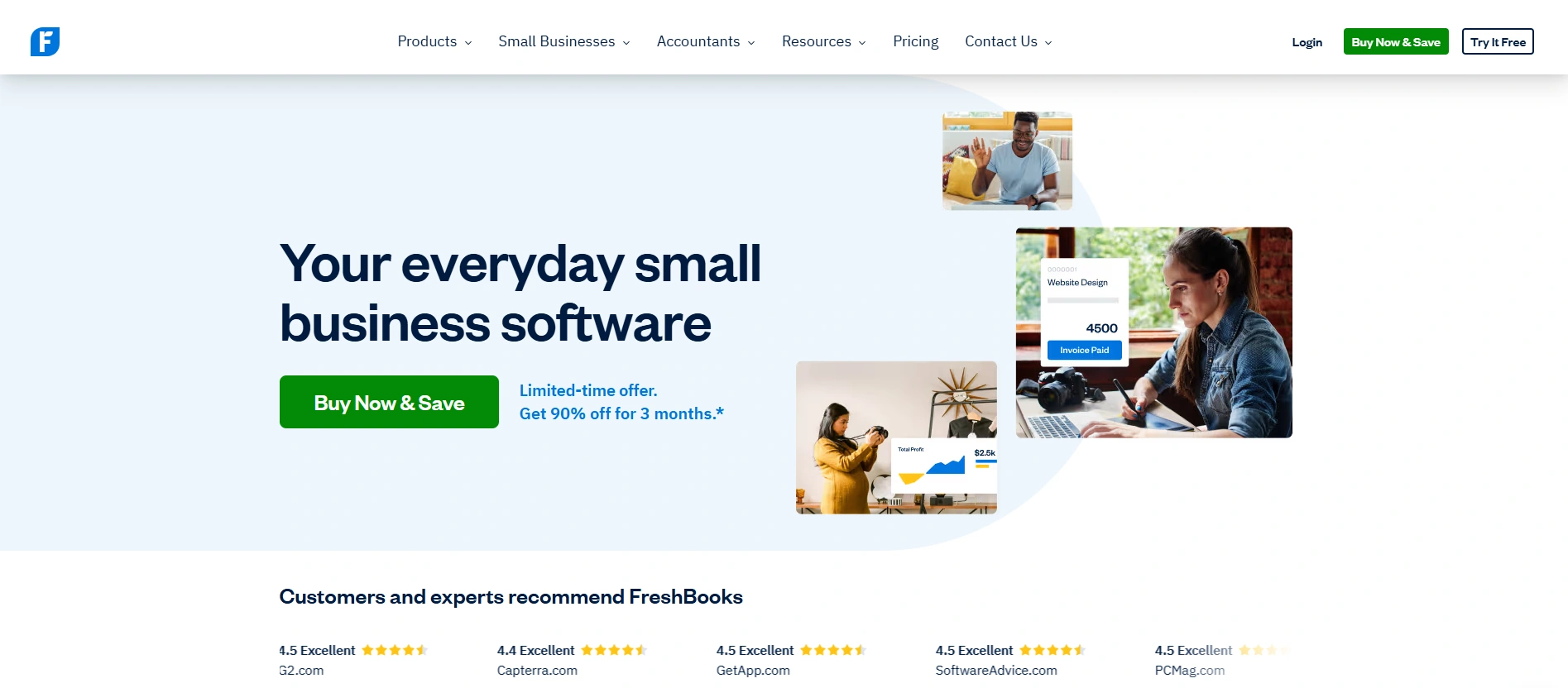
Invoicing-focused accounting software built with freelancers and service businesses in mind.
The story behind FreshBooks is peculiar: it was established in Toronto in 2003 after its founder-to-be Mike McDerment accidentally overwrote an invoice. Following that blunder, he set out to create a simpler way to manage billing. Since then, the platform has expanded to serve more than 30 million users across 160+ countries, according to the company data. Its strengths remain closely tied to invoicing, time tracking, and expense management, making it particularly popular with freelancers and service-based businesses. While double-entry accounting capabilities have evolved over time, organizations with highly complex accounting requirements may need a more advanced platform.
Why we picked it
FreshBooks stands out for businesses that bill clients by the hour or manage multiple projects. Its interface is straightforward, making it accessible even for users without a finance background.
- Services offered: Cloud accounting, invoicing, expense tracking, time tracking, and online payments.
- Pros: Strong invoicing and time-tracking features. Easy to use for non-accountants. Helpful project and client management tools.
- Cons: Limited advanced accounting functionality compared with larger platforms. Lower-tier plans include client limits.
- Best for: Freelancers, consultants, solopreneurs, and small service businesses.
- Pricing: Subscription-based plans with a free trial available.
- Year established: 2003.
- Location: Toronto, Canada.
#7 Zoho Books
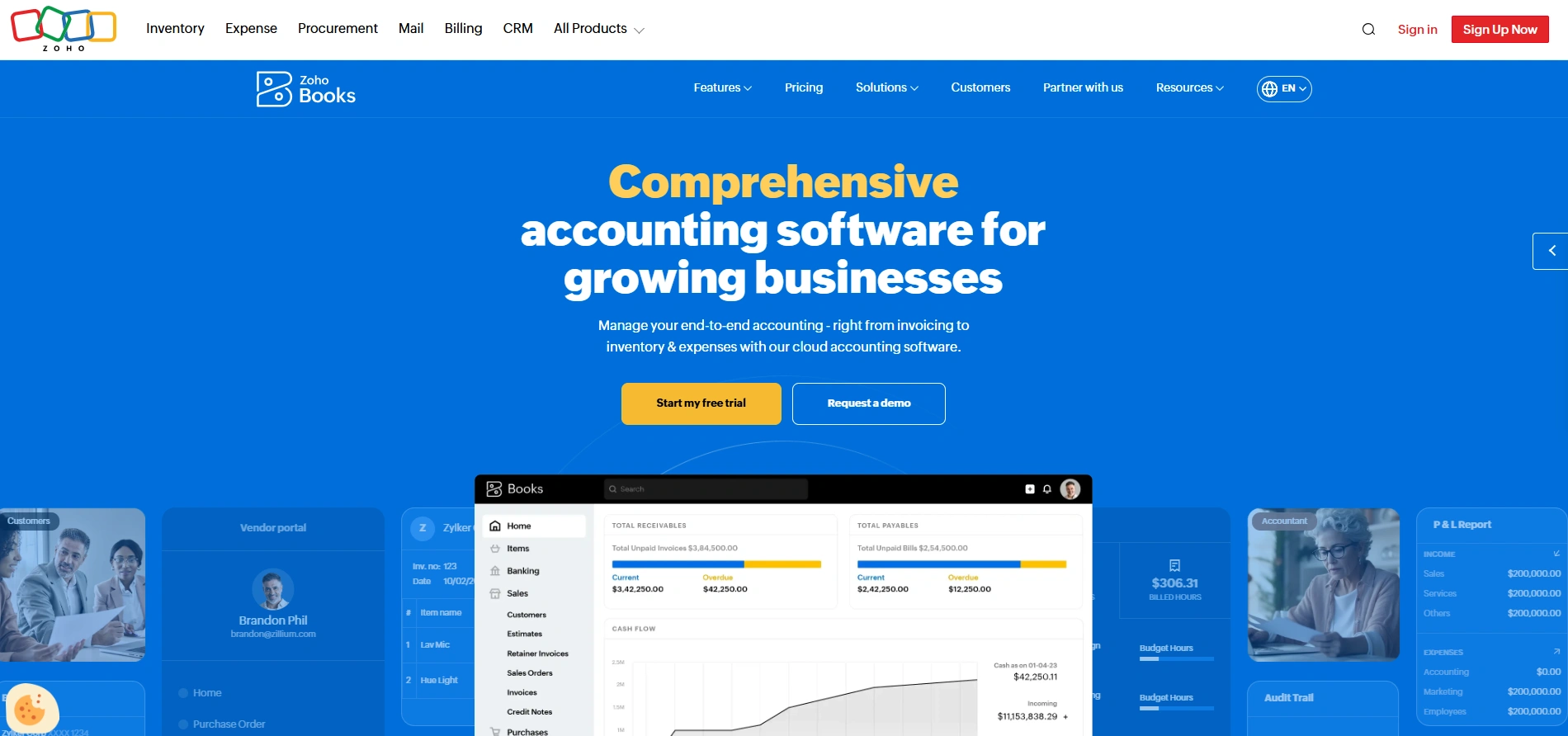
Accounting software that integrates seamlessly with a broader business platform.
Zoho Books is part of Zoho Corporation, founded in 1996 and serving more than 100 million users worldwide. The platform’s biggest advantage is its connection to the wider Zoho ecosystem. Businesses already using Zoho CRM, Zoho Inventory, or Zoho Payroll can share data across systems with minimal setup. Competitive pricing and a free tier for qualifying businesses also make it an attractive option for cost-conscious teams. Businesses in the United States, however, may find its smaller accountant and advisor network lacking compared to platforms like QuickBooks, for example.
Why we picked it
For organizations already invested in Zoho products, Books provides a natural extension of the existing technology stack. Even as a standalone accounting solution, it delivers a strong mix of automation and affordability.
- Services offered: Cloud accounting, invoicing, inventory management, tax compliance, and workflow automation.
- Pros: Tight integration with other Zoho applications. Free tier available for qualifying businesses. Strong automation features at a competitive price.
- Cons: Smaller US accounting ecosystem. Delivers the most value when used alongside other Zoho products.
- Best for: Small and mid-sized businesses looking for an integrated business management suite.
- Pricing: Free plan available, along with multiple paid subscription tiers.
- Year established: 1996 (Zoho Corporation).
- Location: Chennai, India, and Austin, Texas.
#8 Wave
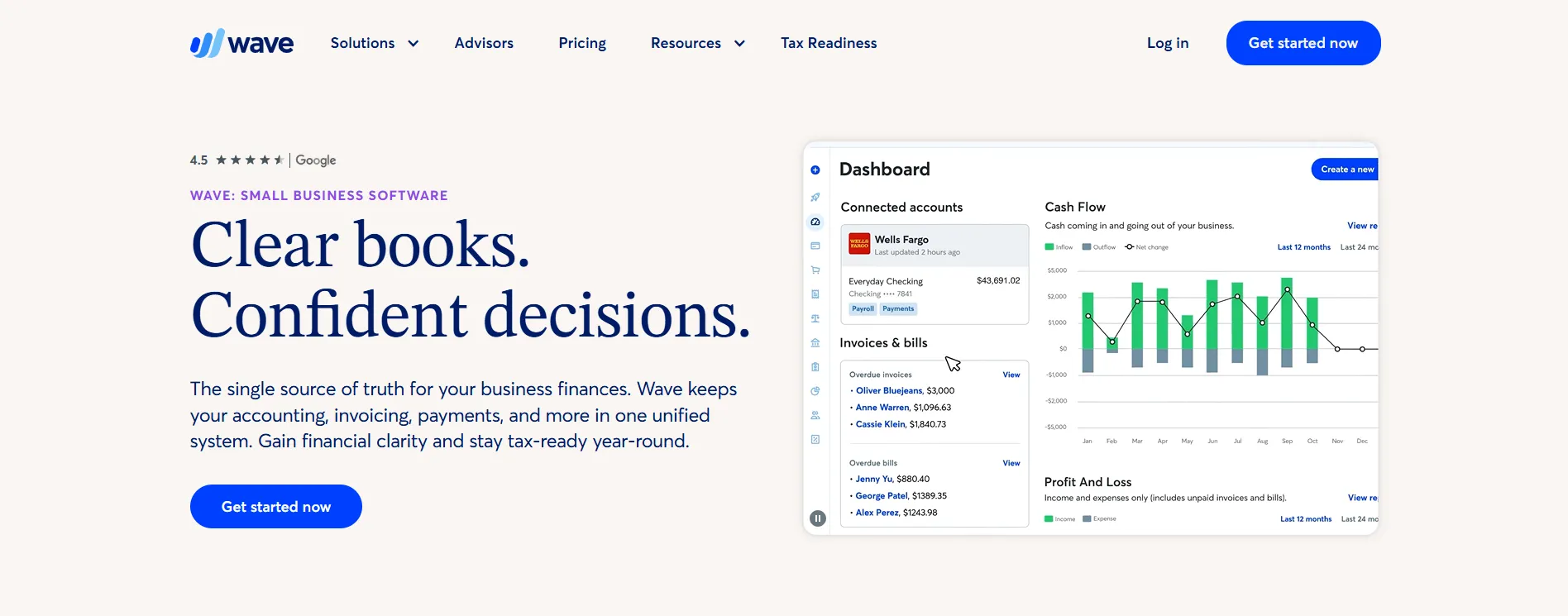
Free accounting software for businesses that need the essentials.
Wave built its reputation around offering core accounting and invoicing tools at no cost. Following its acquisition by H&R Block in 2019, the platform has continued to focus on freelancers, independent professionals, and small businesses. Wave does not charge subscription fees for its accounting software. Instead, it generates revenue through services such as payments and payroll.
The platform’s simplicity is one of its main strengths, but it also limits how far businesses can scale with it. Organizations that require advanced reporting, extensive integrations, or multi-entity accounting often transition to more robust systems as they grow.
Why we picked it
Wave lowers the barrier to keeping accurate financial records. Businesses can start with free accounting tools and add paid services only when their needs expand.
- Services offered: Free accounting and invoicing, payment processing, payroll, and bookkeeping advisor services.
- Pros: No-cost accounting and invoicing. Easy setup and straightforward user experience. Flexible pay-as-you-grow model.
- Cons: Limited advanced functionality and integration options. Not designed for complex accounting environments.
- Best for: Freelancers, sole proprietors, and micro-businesses with straightforward accounting needs.
- Pricing: Free accounting software with optional paid services for payments, payroll, and advisory support.
- Year established: 2009.
- Location: Toronto, Canada.
#9 Pilot
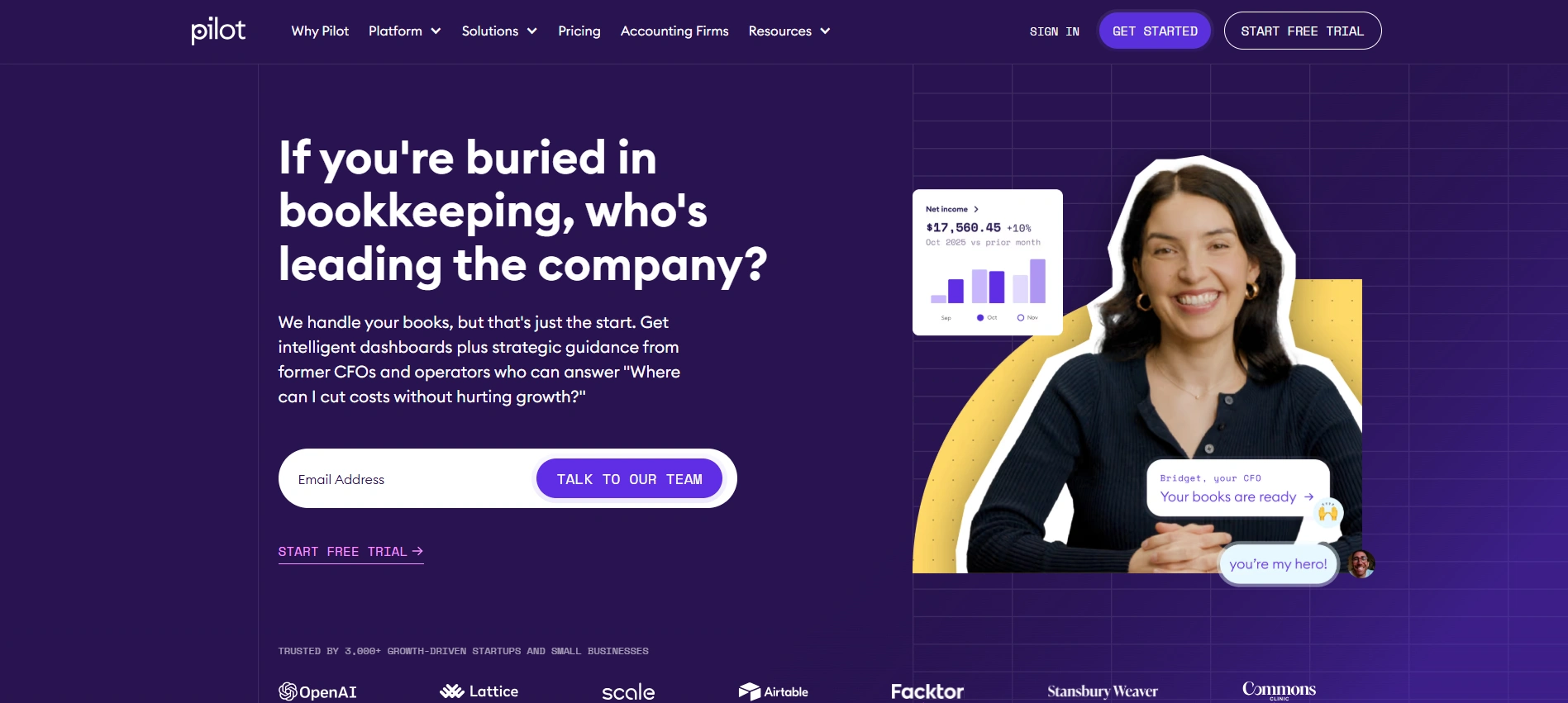
Outsourced bookkeeping and finance support designed for startups.
A San Francisco-based company, Pilot combines proprietary software with a team of accounting professionals to manage bookkeeping and financial operations for startups and growing businesses. The company has become a well-known name in the venture-backed startup ecosystem by offering services that extend beyond bookkeeping to include tax support and fractional CFO assistance.
Unlike traditional accounting software, Pilot operates as a managed service. Clients rely on its team to oversee monthly closes, maintain financial records, and support reporting requirements. The service-based model comes at a higher cost than self-managed software, but many founders see value in freeing internal teams from day-to-day accounting tasks.
Why we picked it
Pilot is a strong option for startups that need reliable financial reporting without building a full in-house accounting function. Its combination of software and human expertise helps maintain consistency as companies scale.
- Services offered: Managed bookkeeping, tax preparation and filing, CFO services, and FP&A support.
- Pros: Dedicated accounting professionals. Built around startup reporting needs. Access to tax and finance advisory services.
- Cons: More expensive than traditional accounting software. Primarily focused on startup and tech businesses.
- Best for: Venture-backed startups and growing companies seeking outsourced accounting support.
- Pricing: Monthly plans with pricing based on company size and service requirements.
- Year established: 2017.
- Location: San Francisco, California.
#10 BILL
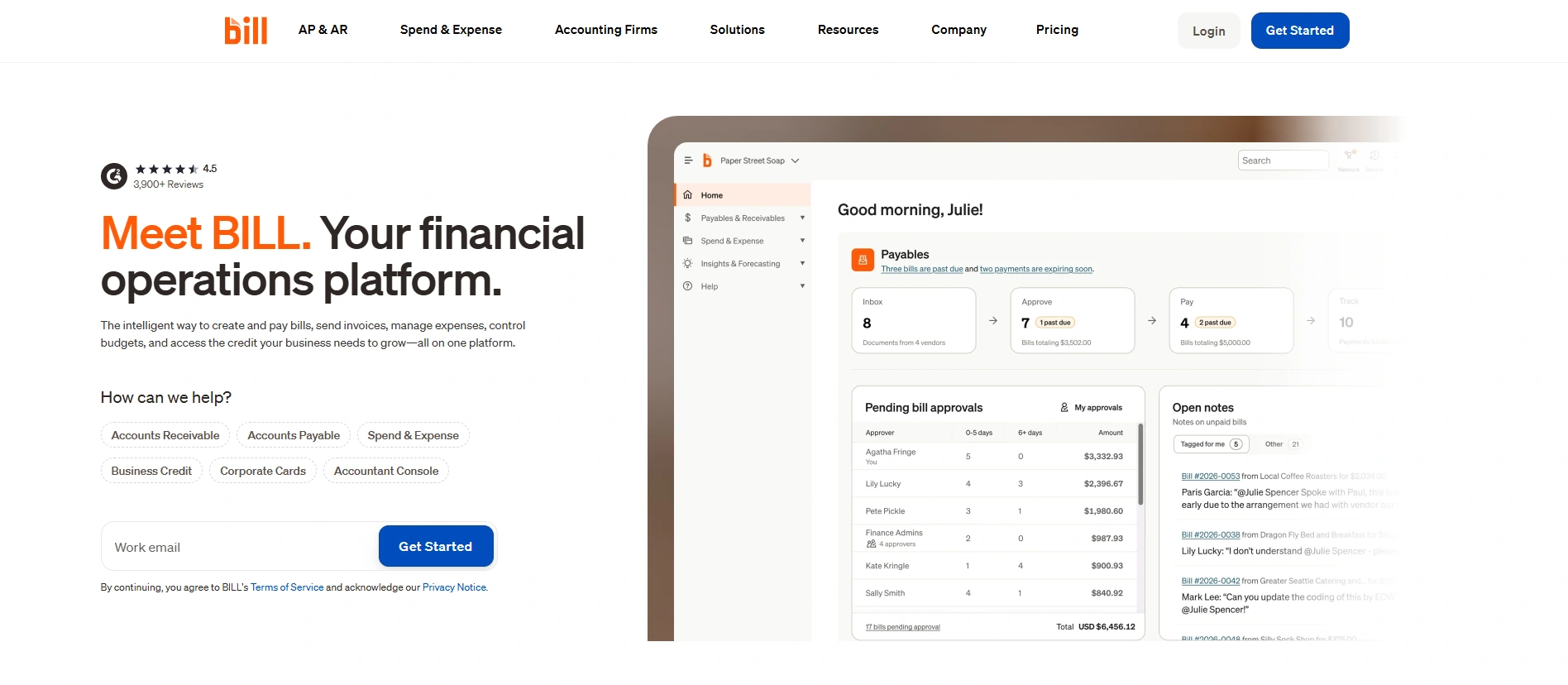
Automation software for accounts payable and accounts receivable workflows.
Since 2006, BILL has been focusing on helping businesses automate the movement of money. It is not a complete accounting platform. Instead, it operates alongside existing accounting systems and streamlines processes such as bill payments, invoice management, approvals, and expense controls. Integrations with QuickBooks, Xero, NetSuite, and Sage make it a common addition to established finance technology stacks.
For teams spending significant time managing approvals, vendor payments, or accounts payable workflows, BILL can reduce much of the manual effort involved.
Why we picked it
BILL earns its place on this list because of its ability to simplify accounts payable and receivable processes without requiring businesses to replace their existing accounting platform.
- Services offered: AP and AR automation, bill payments, invoicing, spend management, and expense controls.
- Pros: Strong approval and payment workflows. Integrates with major accounting systems. Extensive vendor payment network.
- Cons: Does not function as a standalone accounting ledger. Subscription and transaction costs can increase over time.
- Best for: Small and mid-sized businesses looking to automate manual payment and approval processes.
- Pricing: Subscription-based pricing with additional transaction fees depending on usage.
- Year established: 2006.
- Location: San Jose, California.
#11 Ramp
Spend management software with a strong focus on finance automation.
Founded in New York in 2019, Ramp has quickly become one of the most prominent companies in the spend-management space. The platform began with corporate cards but has since expanded into bill payments, procurement, expense controls, and accounting automation. Today, it serves more than 50,000 customers and continues to position itself as a tool for helping finance teams streamline operations and reduce unnecessary spending.
Ramp is one of the very few names on this list designed to work alongside existing accounting platforms. Most businesses connect it to systems such as QuickBooks or NetSuite, allowing transaction data and expense coding to flow directly into their financial records.
Why we picked it
Ramp is particularly valuable for organizations focused on improving financial controls and reducing manual accounting work. Its automation capabilities can save significant time during month-end close and reporting cycles.
- Services offered: Corporate cards, spend management, bill pay, procurement, and accounting automation.
- Pros: Strong expense automation. Detailed spend controls and insights. Free core platform. Integrates well with major accounting systems.
- Cons: Not a standalone accounting platform. The card-focused model is most relevant for US-based companies.
- Best for: Growth-stage and mid-market organizations seeking greater visibility and control over spending.
- Pricing: Free core platform with paid Plus and Enterprise plans.
- Year established: 2019.
- Location: New York City.
#12 Puzzle
An AI-native accounting platform built around real-time financial data.
Puzzle takes a different approach from traditional accounting software. Founded in San Francisco in 2019 by Sasha Orloff, the company chose against adapting legacy accounting systems and instead rebuilt the general ledger around modern financial infrastructure. The platform connects directly with tools like Stripe, Gusto, Mercury, Brex, and Ramp to provide continuously updated financial information.
Puzzle’s appeal lies largely in real-time visibility. Startup founders and finance teams can monitor cash flow, burn rate, and runway without waiting for month-end reporting. As a newer entrant, however, Puzzle has a smaller ecosystem and less accountant familiarity than more established accounting platforms.
Why we picked it
Puzzle brings a fresh perspective to startup accounting. Organizations that prioritize real-time financial insights may find its architecture better aligned with modern finance workflows than traditional accounting software.
- Services offered: AI-native general ledger, real-time bookkeeping, burn rate and runway tracking, cash and accrual accounting.
- Pros: Real-time integration with modern fintech tools. Significant automation of routine accounting tasks. Free tier for early-stage businesses.
- Cons: Smaller ecosystem and partner network. Primarily designed for startups.
- Best for: Venture-backed and early-stage companies that want up-to-date financial visibility.
- Pricing: Free starter tier with paid plans available as businesses grow.
- Year established: 2019.
- Location: San Francisco, California.
#13 Patriot Software
Straightforward accounting and payroll for small businesses.
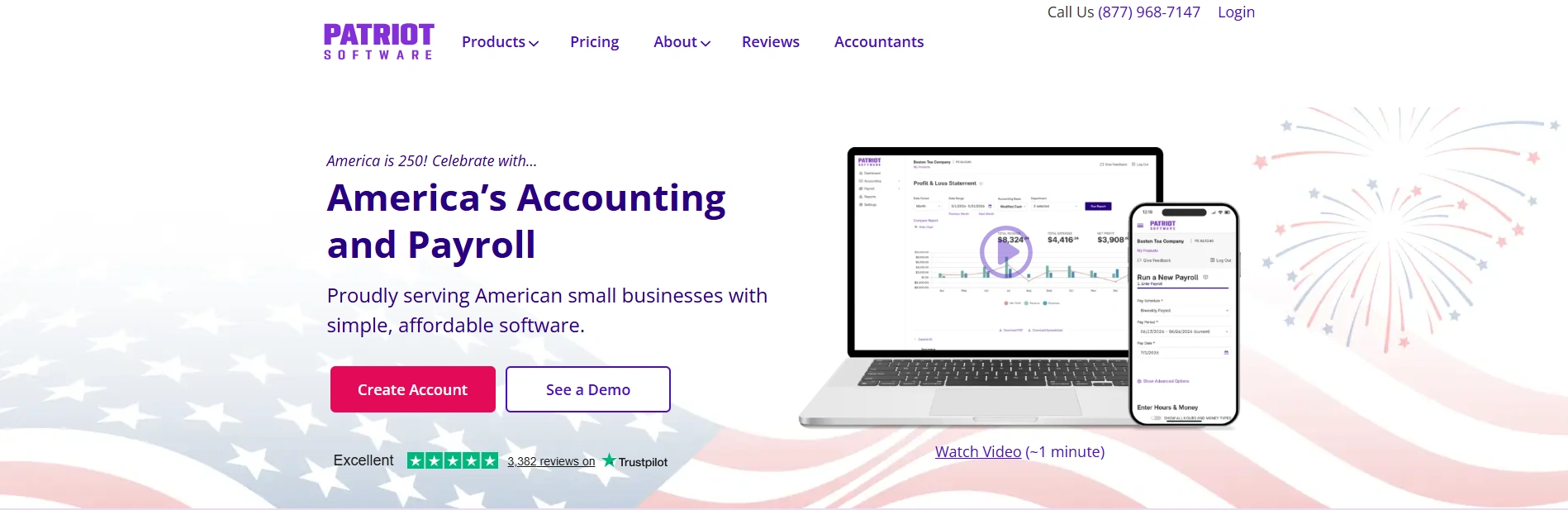
Patriot Software has served small businesses since 2002 from its headquarters in Canton, Ohio. The company focuses on affordability and ease of use. Its accounting and payroll products are designed to cover essential business needs without overwhelming users with advanced functionality.
This focus is what has helped Patriot build a loyal following among small businesses that want practical tools at predictable pricing. While larger organizations may eventually need more sophisticated reporting and integrations, many small companies find Patriot’s simplicity to be one of its strongest advantages.
Why we picked it
Patriot delivers strong value for businesses that want reliable accounting and payroll software without paying for features they are unlikely to use.
- Services offered: Online accounting, payroll, time and attendance tracking, and HR add-ons.
- Pros: Affordable pricing. Easy setup process. Accounting and payroll in one platform. US-based customer support.
- Cons: Limited to US businesses. Smaller integration ecosystem than larger competitors.
- Best for: Small businesses looking for a simple and cost-effective accounting solution.
- Pricing: Accounting plans start at $20 per month. Payroll plans start at $17 per month plus $4 per employee.
- Year established: 2002.
- Location: Canton, Ohio.
#14 1-800Accountant
A virtual accounting firm combining software with professional support.
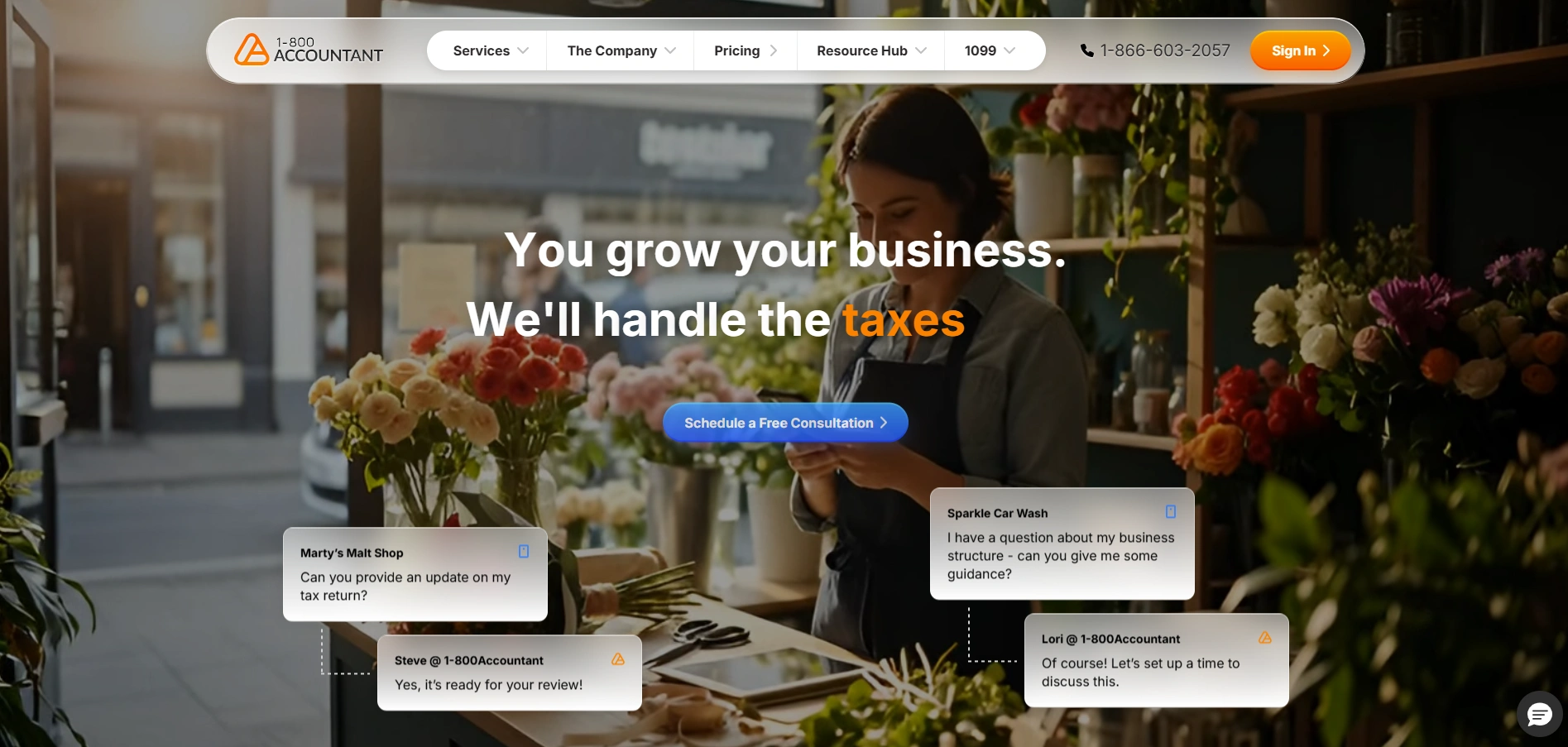
1-800Accountant serves small businesses and self-employed professionals through a blend of accounting software and licensed accounting expertise. The company positions itself as a virtual accounting firm, not a software provider, offering services that include bookkeeping, tax preparation, payroll, and business formation assistance.
The model offers a middle ground between self-service software and fully traditional accounting support, often chosen by business owners who want professional guidance without maintaining a relationship with a local accounting firm.
Why we picked it
1-800Accountant provides access to accounting professionals through a predictable membership structure, making it appealing to business owners who prefer hands-on support.
- Services offered: Virtual bookkeeping, tax planning and preparation, payroll, business formation, and advisory services.
- Pros: Access to licensed accounting professionals. Tax and formation services included. Designed for small business needs.
- Cons: Primarily focused on US businesses. Service experience may vary depending on the assigned advisor.
- Best for: Small business owners and self-employed professionals who prefer ongoing accounting support.
- Pricing: Membership plans with pricing based on service level and business needs.
- Year established: 2014.
- Location: New York, New York.
Helpware: Our Top Choice
Among the providers reviewed here, Helpware stands apart because it focuses on executing finance operations rather than simply providing software. Platforms such as QuickBooks, Xero, and NetSuite give finance teams the tools to manage accounting processes. Helpware provides the people and operational support to help run those processes day to day.
Several factors contributed to its placement at the top of this list. First, the company operates within the systems businesses already use, reducing the disruption and cost associated with platform migrations. Second, its reported performance metrics—including a 90% CSAT score, 2.8% monthly attrition, and average client relationships exceeding five years—suggest a strong emphasis on service quality and continuity. Finally, its ability to scale support from small teams to large operations makes it relevant across a wide range of growth stages.
The model is not designed for businesses looking for a quick self-service solution, though: onboarding is consultative, and pricing is customized to the scope of work. However, for organizations seeking long-term operational support and not just another software subscription, that trade-off may be worthwhile.
Choosing the Right Fit
Selecting an accounting solution in 2026 is less about finding the platform with the longest feature list and more about identifying the operating model that fits your business.
Companies that prefer to manage accounting internally may gravitate toward platforms such as QuickBooks, Xero, or Sage Intacct. Businesses looking to automate specific workflows might benefit from solutions such as BILL or Ramp. Others may decide that outsourcing bookkeeping and finance operations to a provider such as Helpware or Pilot offers a better return on time and resources.
The right choice depends on multiple factors, such as transaction volume, reporting complexity, growth plans, and available internal expertise. Shortlisting a few strong candidates and evaluating them against your actual workflows often produces better results than comparing feature lists alone.