






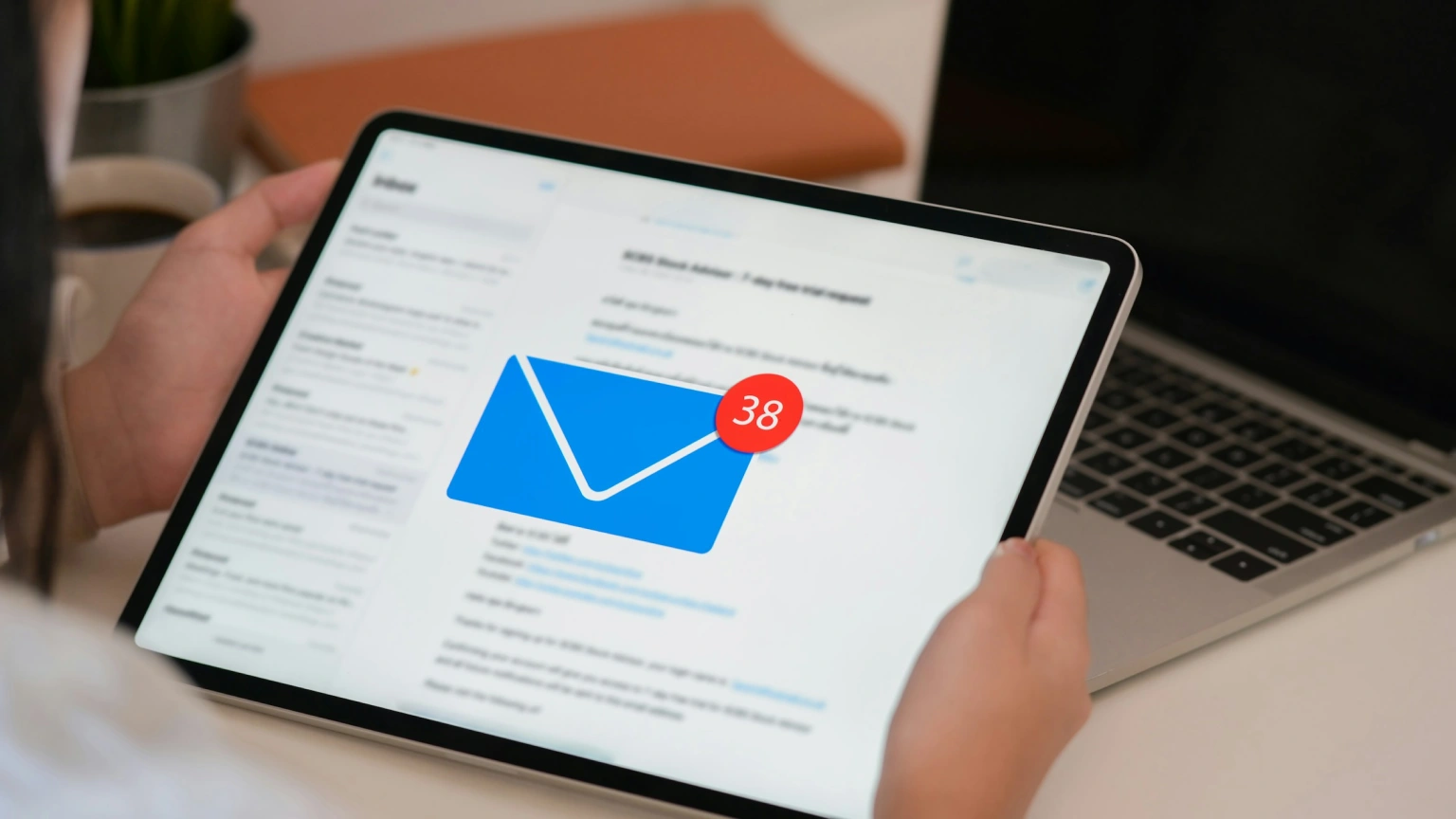
Your customer emailed at 11 p.m. Someone on your team opens it two days later, and by then that customer has already reached out to a competitor. Email feels less urgent than phone or live chat, so it’s often pushed to the bottom of the queue. That delay is where trust quietly leaks out of your business.
Email is still one of the world’s most used communication channels. Roughly 4.7 billion people use email worldwide in 2026, as per the Radicati Group via Statista, and the world sends and receives more than 376 billion emails a day.
Email remains a major part of the workday. According to Microsoft’s 2025 Work Trend Index, the average employee receives 117 emails a day, based on trillions of Microsoft 365 productivity signals and a survey of 31,000 knowledge workers across 31 markets. Your customers spend their day in that same inbox, and they notice how quickly and how well you respond.
If you’re looking for an outsourcing partner, our top nine picks for 2026 are Helpware, SupportYourApp, PartnerHero, Hugo, Simply Contact, WOW24-7, Horatio, TaskUs, and Influx. Helpware ranks first for regulated, multilingual email support at scale. The best choice for your business depends on your ticket volume, support channels, and compliance requirements.
Why Email Is the Channel Buyers Quietly Judge You On
Phone calls demand an immediate answer because someone is waiting. Email gives teams more flexibility, which often leads to delays. When customers receive a slow or generic response, it can feel like the business doesn’t value their time. That impression is often enough to send them elsewhere.
Why it matters: Email is asynchronous, so quality and response time are easy to overlook until your customer satisfaction (CSAT) score drops. A strong email support partner protects the channel you are least likely to watch.
What Is Email Support Outsourcing
Email support outsourcing means a third-party team answers your customer emails and tickets for you, under your brand and your service standards. Agents work inside your help desk, follow your playbooks, and resolve inquiries such as order issues, billing questions, account problems, and technical troubleshooting. Your company remains responsible for the customer relationship, while the outsourcing partner manages the daily workload.
The Email Support Scorecard: 6 Criteria That Protect CSAT
Most roundups rank vendors by headcount and hourly rate. Those numbers tell you almost nothing about the experience your customer receives over email. Score every provider on these six criteria instead, they make for a better comparison.
- First-response-time service-level agreement (SLA). Ask for a written first-response and resolution SLA for email, not a vague promise of fast replies.
- Async quality assurance (QA). Look for real QA scoring of written replies, not just deflection or ticket-closed counts. Tone and accuracy matter in email.
- Help desk and CRM integration. Confirm that agents can work directly in your existing platforms, whether you use Zendesk, Gorgias, Salesforce, or another system.
- Multilingual coverage. Make sure the provider offers the languages your customers actually use, with agents who have strong written communication skills.
- Peak season scaling. Ask how quickly the provider can add trained agents during busy periods such as product launches or seasonal sales and how they maintain quality as volumes increase.
- Security and compliance. If your business handles regulated data, confirm that the provider has the certifications you require, such as SOC 2, ISO 27001, HIPAA, PCI DSS, or GDPR.
The 9 Best Email Support Services For 2026 in Brief
The table below compares all nine providers on the factors that decide fit. Read the full descriptions in a section after it for the details behind each pick.
| Provider | Best for | Pricing model | Languages | Key strength |
|---|---|---|---|---|
| Helpware | Regulated, multilingual CX at scale (healthcare, fintech, ecommerce) | Custom (managed teams, staff augmentation) | 45+ | SOC 2, ISO 27001, HIPAA, GDPR; 90% CSAT; 5-yr avg partnerships |
| SupportYourApp | Tech and SaaS, compliance-heavy support | Custom | 60+ | PCI DSS Level 1, ISO/IEC 27001:2022 |
| PartnerHero | Flexible-hours or dedicated email teams | Flex from $10/hr; dedicated from $1,975/mo | Multilingual | Follow-the-sun coverage, 3-month terms |
| Hugo | Fast-growing digital brands | Per-agent, month-to-month | 60+ | Dedicated teams, per-team QA and coaching |
| Simply Contact | European multilingual support | Custom | 20+ | Multichannel, security-certified |
| WOW24-7 | SMBs and startups wanting boutique flexibility | Month-to-month | 20+ | Cancel within one month, boutique model |
| Horatio | Nearshore dedicated teams | Custom | Multilingual | Nearshore (Latin America), real-time QA |
| TaskUs | High-growth tech and digital at scale | Custom (enterprise) | 30+ | Trust and safety, content moderation, scale |
| Influx | Seasonal and ecommerce flexibility | Month-to-month | Multilingual | On-demand scaling, 24/7 coverage |
How We Chose
We scored providers against the six-criteria scorecard above, weighting first-response SLAs, async QA, integrations, and compliance most heavily. We confirmed every factual claim against each provider’s own website or another primary source and left out anything we did not confirm.
Helpware publishes this guide. We have ranked ourselves first based on the criteria above and aimed to represent every provider fairly. Verify the specifics for your own use case before you sign.
The 9 Best Email Support Outsourcing Services, Reviewed
1. Helpware
Best for: Regulated, multilingual email support at scale, with deep healthcare and telehealth experience.
What stands out: We run omnichannel, multilingual customer and technical support across 45+ languages, with managed teams that act as an extension of yours. Our work is backed by SOC 2 Type II, ISO 27001, ISO 9001, HIPAA, and GDPR, so regulated email queues stay compliant. We hold a 90 percent CSAT and an 86 percent employee satisfaction score, and our client partnerships run five years on average, well above the one-to-two-year industry norm. Teams scale from a small pilot to 500+ seats in 90 to 120 days, and we integrate with Salesforce, Zendesk, and HubSpot.
Considerations: We are built for managed teams and ongoing partnerships. A business that wants only a few ad-hoc hours a week of inbox coverage might find a flexible-hours provider a closer fit at the entry level.
Pricing model: Custom, based on managed-team size or staff augmentation. Pilot and proof-of-concept programs run 30 to 60 days.
2. SupportYourApp
Best for: Tech and SaaS companies with compliance-heavy support.
What stands out: A customer support BPO focused on technology and SaaS clients. The company is a confirmed PCI DSS Level 1 Service Provider and is ISO/IEC 27001:2022 certified, with annual third-party audits. It supports more than 60 languages and provides email, chat, and other support channels for global teams.
Considerations: Customer reviews are generally positive, although some clients mention challenges with accountability and service consistency on larger programs. Review service-level agreements carefully.
Pricing model: Custom, by program scope and team size.
3. PartnerHero
Best for: Brands that want flexible hours or a dedicated email team without long lock-in.
What stands out: PartnerHero offers two service options. Flex support is billed by the hour for lower or less predictable volumes, while dedicated teams handle ongoing support. Published pricing at the time of writing starts at $10 per hour for Flex support and $1,975 per month for a full-time dedicated agent. The company also provides follow-the-sun coverage and assigns a launch program manager during onboarding.
Considerations: Flex hours suit smaller volumes; very high, complex queues point toward a dedicated team. PartnerHero became part of Crescendo after its 2024 acquisition, so confirm the current branding, pricing, and contract terms.
Pricing model: Flex from $10 per hour; dedicated from $1,975 per agent per month; three-month terms.
4. Hugo
Best for: Fast-growing digital brands that want dedicated, never-shared teams.
What stands out: Hugo builds tailored teams that work only for your brand, across email, chat, phone, and social, in 60+ languages. Agents usually have several years of experience, and every team gets a dedicated QA specialist, trainer, and coach, which keeps quality consistent. Hugo’s month-to-month terms and rapid ramp suit startups that scale in bursts.
Considerations: Premium positioning means it is not the cheapest entry point. Best where quality and dedicated staffing outweigh low rates.
Pricing model: Per-agent, month-to-month, with rapid team ramp.
5. Simply Contact
Best for: European and multilingual email support across fintech, travel, and ecommerce.
What stands out: Simply Contact provides customer support in more than 20 languages across email, chat, voice, and social media. Its experience includes fintech, travel, airlines, ecommerce, and logistics, making it a good fit for businesses serving customers across multiple European markets.
Considerations: Strongest fit for European programs; confirm time-zone coverage if you have primarily North American queues.
Pricing model: Custom, by language mix and volume.
6. WOW24-7
Best for: SMBs and startups that want boutique service and easy exit terms.
What stands out: A boutique customer-support company with a low-commitment model: month-to-month terms let you stop within one month. Coverage of 20+ languages, a trained-agent academy, and round-the-clock staffing make it a flexible first outsourcing step for growing teams.
Considerations: Boutique scale is a strength for SMBs and a constraint for very large enterprise programs. Ask about peak season capacity before signing.
Pricing model: Month-to-month, no long-term lock-in.
7. Horatio
Best for: Brands that want nearshore, dedicated email teams in aligned time zones.
What stands out: Horatio runs dedicated, trained email teams with a nearshore Latin America delivery base and real-time QA. Time-zone alignment with North America keeps response times tight, and a dedicated email page shows experience across ecommerce, SaaS, healthcare, fintech, travel, and edtech.
Considerations: Nearshore focus is ideal for North American hours; confirm coverage for wider global needs.
Pricing model: Custom, by team size and scope.
8. TaskUs
Best for: High-growth technology and digital brands that need scale and trust and safety.
What stands out: TaskUs is a large customer experience provider serving technology, gaming, and fintech companies. It supports more than 30 languages and combines customer service, technical support, content moderation, and trust and safety services, making it well suited for businesses with high email volumes.
Considerations: Enterprise scale fits high-volume programs; smaller teams might prefer a boutique partner for closer attention.
Pricing model: Custom, enterprise engagements.
9. Influx
Best for: Ecommerce and seasonal brands that need on-demand scaling.
What stands out: Influx provides flexible, on-demand support with month-to-month terms and 24/7 coverage, built for brands with seasonal peaks. Teams scale up and down around sales events, which keeps cost aligned with real volume across email and chat.
Considerations: Businesses with highly technical products or strict compliance requirements should discuss those needs before starting.
Pricing model: Month-to-month, scalable by volume.
Build vs. Outsource vs. AI-only: Which Fits Your Email Volume
Outsourcing is not always the right move. The best approach depends on your email volume and how much attention each conversation needs.
- Keep it in-house when volume is low, replies need deep product or founder context, or the conversation is high-stakes and relational. Under a few dozen tickets a week, an internal owner usually wins.
- Outsource when volume is steadily high or spiky, you need 24/7 or multilingual coverage, and your internal team is drowning in routine email instead of high-value work.
- Add AI triage, not AI-only, when a large share of email is repetitive. AI can sort tickets, suggest replies, and handle simple requests, while trained agents manage complex or sensitive conversations. Relying only on AI often leads to a poor customer experience when questions require judgment or empathy.
How to Choose the Right Partner for Your Inbox
Shortlist two or three providers that match your criteria, then run a paid pilot of 30 to 60 days on a part of your real queue. Compare first-response time, QA scores, and CSAT on the same tickets. Read recent third-party reviews for current sentiment, and weigh what real users say over polished sales decks.
What ecommerce operators say on Reddit
Recent r/ecommerce threads echo the scorecard we offered above. These are real operators, not vendors, describing when and how they hand off email support.
Automate the routine first. Email queues in small companies are entirely manageable on your own with partial automation. You can hire help later when you notice the need to choose between answering emails and managing business growth.

“I started as a 1 person team. I only added Virtual assistants until I passed $3m in sales. The first year I did it entirely solo (less than $100k that year). makes the most sense to start this way until you start to generate some significant order volume.”
“That’s always gonna be the reality with AI – it can deflect the simple stuff but someone still needs to handle the “where is my order i need it by friday for my sons birthday” type messages.
You either accept that’s your role indefinitely or you build a system where someone else owns the inbox and you just handle escalations.”
Outsource once email starts slowing the business down. When customer email starts eating up to half the day, a dedicated team frees your time for revenue and strategy.
“Customer support is a critical part of the customer journey but clearly draining your energy, it might be time to delegate that specific piece so you can focus on the parts of the business you actually love!”
“This seems to be the solution I need. I really enjoy so many aspects of my business, but the customer service part has become overwhelming.”
Protect brand voice. A business needs to reply under one support identity. You can lean on saved replies for consistency, and when you hire a partner, they need training on tone and playbooks, not just ticket volume.
Keep a human on the anxious edge cases. The recurring example is the “I need it by Friday” message, where empathy and judgment matter more than raw speed. Confirm which queues the partner owns and where escalations go.
The Bottom Line
Email is the channel your buyers use most and the one you are least likely to watch. The right partner protects response time, quality, and brand voice while your team focuses on growth. Score every provider on first-response SLAs, async QA, integrations, languages, scaling, and compliance, then pilot before you commit.
If you need regulated, multilingual email support that scales without a quality drop, talk to the Helpware CX team and scope a 30-to-60-day pilot on your own queue.