








Healthcare payment processing has never been under more pressure — or more scrutiny. According to a Research and Markets report published March 2026, the global healthcare digital payment market is growing from $23.01 billion in 2025 to $28.18 billion in 2026, a 22.5% annual jump driven by telehealth expansion, patient demand for contactless payments, and the push for real-time reimbursement. Meanwhile, the American Hospital Association’s 2026 Costs of Caring report found that US hospitals spent $43 billion in 2025 trying to collect payments insurers already owed them. For finance and operations leaders, those two figures tell a stark story: the market is growing fast, but payment friction is still eating billions in operational capacity. Choosing the right healthcare payment processing partner, whether a technology platform, a revenue cycle management firm, or a BPO operations provider, shapes how efficiently your organization recovers revenue and how well patients experience the financial side of their care. This guide compares 10 leading companies to help you find the right fit.
Top 10 Healthcare Payment Processing Companies for 2026: Comparison
| Company Name | Services | Global presence | Employees | Year est. |
|---|---|---|---|---|
| Helpware CX | Healthcare BPO, patient billing support, claims processing, back-office operations, HIPAA-compliant customer support | USA, Mexico, Philippines, Ukraine, Georgia, Puerto Rico, Poland, Germany, Albania (19 locations total) | ~4,000 | 2015 |
| Waystar | Revenue cycle management software, claims management, eligibility verification, patient financial care, denial recovery | USA (Louisville KY HQ; multiple locations) | ~1,700 | 2017 |
| R1 RCM | End-to-end RCM, patient access, billing, coding, denial management, patient experience | USA, India (60+ locations) | ~30,000 | 2003 |
| Experian Health | Patient eligibility verification, prior authorization, revenue cycle management, identity management | USA (Franklin TN) | Not publicly disclosed as standalone | 2009 |
| Zelis | Claims cost management, electronic payments, network management, payment integrity | USA (Boston MA HQ; 23 locations) | ~2,757 | 1995 |
| Availity | Health information network, claims submission, eligibility verification, payer-provider connectivity | USA (Jacksonville FL HQ; 14 locations) | ~1,735 | 2001 |
| Phreesia | Patient intake, registration, scheduling, payment collection, insurance verification | USA, Canada | ~2,082 | 2005 |
| Flywire | Healthcare payment platform, patient billing, payment plans, cross-border payments | USA, global offices (240 countries/territories) | ~1,400 | 2009 |
| FinThrive | Revenue cycle management, claims management, contract management, denial management | USA (Plano TX) | Not publicly disclosed | 2016 |
| Rectangle Health | Healthcare payment technology, patient financing, contactless payments, practice management integration | USA | Not publicly disclosed | 1993 |
Top 10 Healthcare Payment Processing Companies for 2026
#1 Helpware CX

The operational backbone your healthcare payment workflows actually need
Healthcare payment processing isn’t just a technology problem — it’s a people problem. Patients need billing questions answered. Claims need human review when automation fails. Prior authorization appeals require knowledgeable staff who understand payer rules. That’s where Helpware CX’s healthcare BPO services fit: as the operational layer that keeps your payment workflows running when software alone isn’t enough.
Founded in 2015 and headquartered in Lexington, Kentucky, Helpware CX operates 19+ locations across 12 countries, serving 400+ clients with a team of 4,000+ professionals. In healthcare, that translates to HIPAA-compliant, omnichannel support teams handling patient billing inquiries, insurance verification, claims processing support, back-office payment operations, and collections assistance. The company holds SOC 2, HIPAA, and GDPR certifications, and its 2.8% monthly attrition rate (against an industry average of 6–8%) means the people handling sensitive patient financial data stay trained, consistent, and deeply familiar with your workflows.
Why we picked it
Among the companies analyzed, Helpware CX stands out for something the technology platforms can’t replicate: the human operational layer that healthcare payment workflows depend on. With a 90% CSAT score and client partnerships that average 5+ years, Helpware CX demonstrates the kind of sustained operational quality that regulated healthcare environments require. For organizations managing high-volume patient billing inquiries, complex claims support, or revenue cycle back-office functions, Helpware CX provides the staffing, compliance infrastructure, and service depth to run those operations reliably.
- Services offered: HIPAA-compliant patient billing support, insurance verification, claims processing assistance, inbound payment inquiries, back-office revenue cycle operations, omnichannel healthcare customer support (phone, email, chat), medical appointment scheduling.
- Pros: 90% CSAT score; 2.8% monthly attrition (well below industry average); SOC 2, HIPAA, GDPR certified; 45+ language support with native speakers; 19+ global offices for 24/7 coverage; 5+ year average client partnerships.
- Cons: Not a payment technology platform (no proprietary claims adjudication software); premium pricing relative to offshore-only BPO providers; consultative onboarding process requires time investment.
- Industry expertise: Healthcare and Telehealth (25–30% of business), including hospital systems, health plans, telehealth platforms, and specialty clinics.
- Best for: Healthcare organizations that need reliable, HIPAA-compliant BPO operations for patient financial services, revenue cycle back-office support, or high-volume patient billing inquiries — particularly mid-market to enterprise providers prioritizing quality over pure cost arbitrage.
- Pricing: Three flexible engagement models (HW.Talent, HW.Team, HW.Hub) with hourly, subscription, or outcome-based billing. Contact for quote.
- Rating: 5.0 ★ (Clutch), 4.9 ★ (Gartner)
- Year established: 2015
- Location: Lexington, Kentucky (HQ); USA, Mexico, Philippines, Ukraine, Georgia, Puerto Rico, Poland, Germany, Albania, South Africa
#2 Waystar

Purpose-built software to simplify the full healthcare payment cycle
Waystar has built one of the more comprehensive cloud-based revenue cycle management platforms in the market. Formed in 2017 through the merger of Navicure and ZirMed, and publicly traded on Nasdaq since 2024, Waystar now serves approximately 30,000 clients representing over one million distinct providers — including 16 of the 20 institutions on the US News Best Hospitals Honor Roll. Its platform processes over 5 billion healthcare payment transactions annually, covering claims management, eligibility verification, denial recovery, patient financial care, and analytics.
What sets Waystar apart is the depth of its claims intelligence layer. The platform uses AI and automation to improve claim and billing accuracy before submission, reducing denial rates and shortening the time from service to payment. For large health systems managing high claim volumes, that upstream accuracy translates directly into faster cash flow.
Why we picked it
Waystar earns its place near the top of this list because of its enterprise-grade scale and track record with major US health systems. Its combination of financial clearance, revenue capture, and denials prevention in a single connected platform addresses the full revenue cycle, not just point-of-service payments.
- Services offered: Claims management and submission, eligibility and benefits verification, prior authorization, denial prevention and recovery, patient financial care, remittance and reconciliation, revenue integrity analytics.
- Pros: Serves 1M+ providers across 30,000 client organizations; processes 5B+ annual payment transactions; AI-powered claim accuracy tools; covers full revenue cycle from pre-service to post-service; publicly traded with enterprise credibility.
- Cons: Software-only platform — implementation and ongoing use require internal staff; pricing can be complex for mid-sized practices; requires integration with existing EHR systems.
- Industry expertise: Hospitals, health systems, physician groups, ambulatory care, post-acute care, behavioral health.
- Best for: Large health systems and hospital networks that need a scalable, technology-led revenue cycle platform with proven denial prevention and claims automation capabilities.
- Pricing: Custom pricing based on transaction volume and services used. Contact vendor for quote.
- Rating: Not publicly disclosed on major review platforms as a standalone rating.
- Year established: 2017
- Location: Louisville, Kentucky (HQ)
#3 R1 RCM
End-to-end revenue cycle management at enterprise scale
R1 RCM operates at a scale few revenue cycle management companies can match. Founded in 2003 as Accretive Health and rebranded in 2017, R1 employs more than 30,000 people across 60+ locations in the US and India, serving over 1,000 hospital and health system clients. The company was taken private in November 2024 in an $8.9 billion deal by TowerBrook Capital Partners and Clayton, Dubilier and Rice, which has since accelerated R1’s investment in AI through its R37 innovation lab focused on agentic revenue cycle automation. R1 generates approximately $2.1 billion in annual revenue, making it one of the largest dedicated RCM providers globally.
R1’s model combines technology-enabled services with managed services staffing — they don’t just sell software, they run revenue cycle operations. For hospital systems that want to hand off the complexity of billing, coding, and collections to a specialized partner, R1 offers depth and operational infrastructure that pure SaaS vendors can’t replicate.
Why we picked it
R1 RCM has earned multiple Best in KLAS designations across RCM categories in 2026, and its combination of scale, technology, and managed services makes it a credible choice for large health systems seeking comprehensive outsourcing of revenue cycle functions.
- Services offered: Patient access and registration, medical billing and coding, claims management, denial resolution, revenue integrity, physician advisory services, patient financial experience, AI-powered automation.
- Pros: 30,000+ employees; 60+ locations; Best in KLAS 2026 designation; combines technology with managed services; strong track record with major health systems; AI innovation lab for next-generation automation.
- Cons: Recently taken private — reduced transparency for prospective clients; past regulatory and legal settlements raise scrutiny for risk-conscious buyers; primarily serves large health systems, less suited to smaller practices.
- Industry expertise: Hospitals, health systems, physician groups, academic medical centers, emergency medical services.
- Best for: Large hospital systems and integrated delivery networks that want to outsource end-to-end revenue cycle management to a technology-enabled services partner with national scale.
- Pricing: Custom engagement model. Contact vendor for quote.
- Rating: Best in KLAS 2026 (multiple RCM categories)
- Year established: 2003
- Location: Murray, Utah (HQ); offices across USA and India
#4 Experian Health
Data-driven revenue cycle intelligence from one of healthcare’s most trusted names
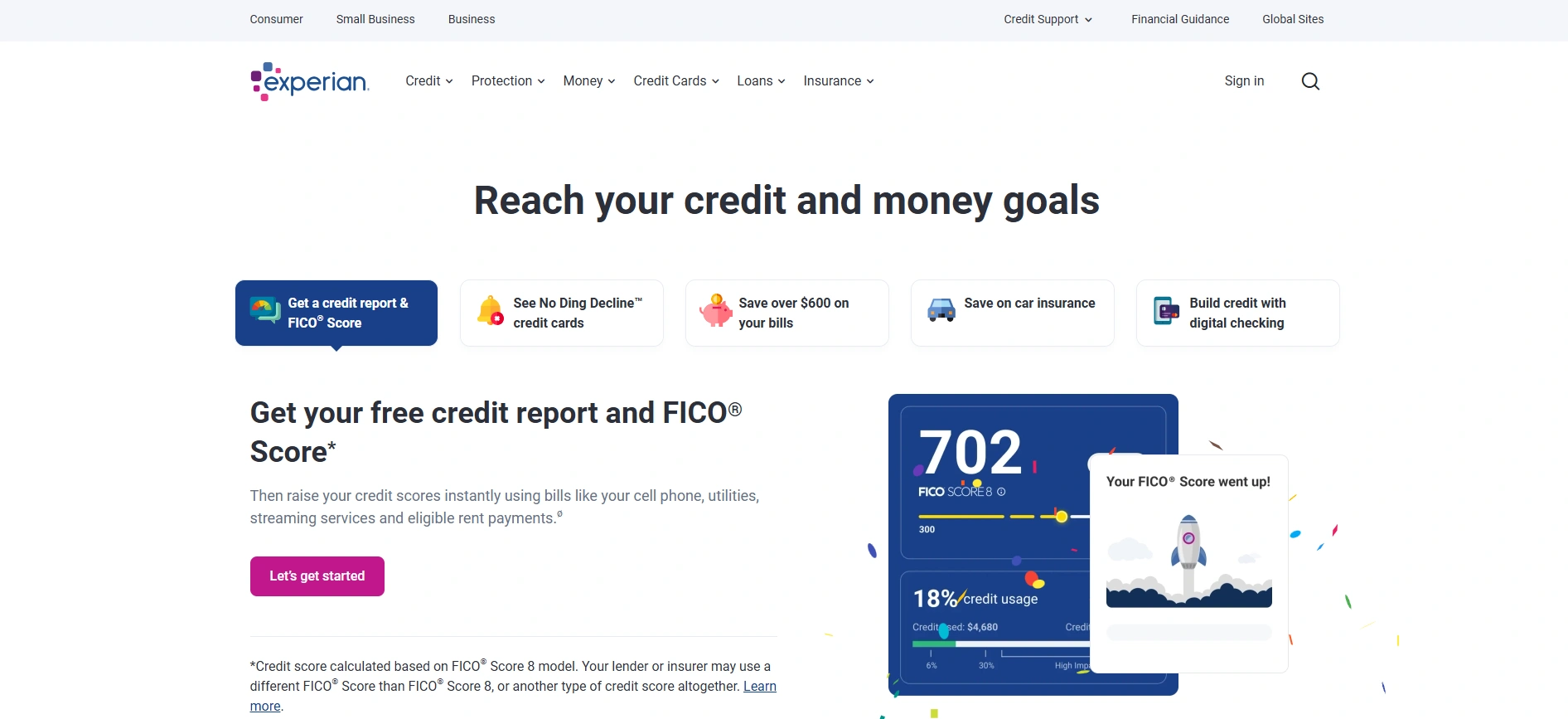
Experian Health operates at the intersection of healthcare IT and the data intelligence capabilities of its parent company, Experian — a global information services company with 22,500+ employees. Based in Franklin, Tennessee, Experian Health focuses on revenue cycle management through patient eligibility verification, identity management, prior authorization, and claims management solutions. In early 2026, Experian Health was named the #1 Revenue Cycle vendor by KLAS Research, recognizing its data accuracy and its ability to reduce denials at the source through better upstream patient information.
The company serves thousands of hospitals, health systems, medical groups, and pharmacies across the US. Its State of Claims 2025 survey found that missing or inaccurate data is the leading cause of claim denials, a finding that directly supports Experian Health’s core value proposition: fix the data problems before claims go out, and denials drop.
Why we picked it
Experian Health’s #1 KLAS ranking in 2026 and its parent company’s unmatched data depth make it a compelling choice for healthcare organizations looking to reduce denials through better patient data management and eligibility verification.
- Services offered: Patient eligibility verification, prior authorization automation, identity management, revenue cycle management, price transparency, patient engagement, collections optimization.
- Pros: #1 Revenue Cycle by KLAS 2026; backed by Experian’s global data infrastructure; reduces denials through upstream data accuracy; serves hospitals, health systems, medical groups, and pharmacies; strong compliance and security credentials.
- Cons: Primarily US-focused; subsidiary model means some capabilities are tightly tied to Experian’s broader platform; less suited to organizations that need full managed services rather than technology solutions.
- Industry expertise: Hospitals and health systems, medical groups, pharmacies, specialty clinics.
- Best for: Healthcare organizations whose primary claim denial driver is data quality — particularly those dealing with high rates of eligibility, authorization, and coverage verification failures.
- Pricing: Custom pricing. Contact vendor for quote.
- Rating: #1 Revenue Cycle — KLAS Research 2026
- Year established: 2009 (as standalone Experian Health)
- Location: Franklin, Tennessee (HQ)
#5 Zelis
A connected payment platform bridging payers, providers, and patients
Zelis has grown into one of the more differentiated players in the healthcare payment technology space by focusing on the payer side of the equation as much as the provider side. Founded in 1995 and headquartered in Boston, Massachusetts, Zelis employs approximately 2,757 people and serves more than 700 payers — including all five major national health plans, Blue Cross Blue Shield insurers, regional health plans, and third-party administrators. Its platform covers claims cost management, electronic payments, network management, payment integrity, and member engagement.
What makes Zelis distinctive is its dual-sided model. By working simultaneously with payers and providers, Zelis can identify misalignments in payment data that cause friction on both sides of the transaction. That perspective has enabled the company to reduce out-of-network payment disputes and improve payment accuracy for its clients.
Why we picked it
Zelis deserves attention for any organization looking to reduce claim payment costs and improve payment accuracy across a broad payer mix. Its 2025 acquisition of Rivet adds provider-facing revenue cycle analytics to its payer-focused payment platform, strengthening its cross-side value proposition.
- Services offered: Claims cost management, electronic payments and disbursements, network management, payment integrity, out-of-network solutions, provider revenue cycle analytics (via Rivet acquisition), member engagement.
- Pros: Serves 700+ payers including all 5 major national health plans; dual-sided payer-and-provider model; strong claims cost management track record; 2024 minority investment from Mubadala signals institutional confidence; growing analytics capabilities.
- Cons: Primary focus on payer-side operations means providers may find the platform less intuitive for their specific billing workflows; private company with limited publicly disclosed financial transparency.
- Industry expertise: Commercial health plans, Medicare Advantage plans, Blue Cross Blue Shield affiliates, regional health plans, TPAs, self-insured employers.
- Best for: Health plans and payers that need to reduce claim payment costs, improve payment accuracy, and modernize electronic disbursements to providers.
- Pricing: Custom pricing. Contact vendor for quote.
- Rating: Not publicly disclosed on major review platforms.
- Year established: 1995
- Location: Boston, Massachusetts (HQ); 23 US locations
#6 Availity
The nation’s largest real-time health information network
Availity describes itself as the nation’s largest dual-sided, real-time health information network — and the scale supports that claim. Founded in 2001 as a joint venture between Blue Cross Blue Shield of Florida and Humana, Availity now employs approximately 1,735 people and facilitates billions of clinical, administrative, and financial transactions annually across its network of providers and health plans. More than 1,300 health plans connect through Availity, and the platform offers free access to a core provider portal that covers eligibility verification, claims submission, and prior authorization.
What distinguishes Availity from point solutions is its network neutrality. Because it operates as a clearinghouse connecting thousands of payers and providers without being owned by any single payer, Availity can serve as a neutral third party for interoperability improvements that individual health plans wouldn’t prioritize on their own.
Why we picked it
Availity’s status as the most widely connected health information network in the US makes it a practical anchor for any provider organization that manages transactions across multiple payers. Its free core portal access also makes it accessible to smaller practices that can’t justify enterprise RCM licensing fees.
- Services offered: Eligibility and benefits verification, claims submission and tracking, prior authorization, remittance management, clinical data exchange, payer-provider connectivity, AI-enabled workflow automation.
- Pros: Connects 1,300+ health plans and hundreds of thousands of providers; free core portal access for providers; HITRUST-certified security; neutral third-party network position; strong response infrastructure (notably during the 2024 Change Healthcare cyberattack).
- Cons: Core portal is functional but not the most intuitive interface; advanced capabilities require paid subscriptions; less suitable as a standalone RCM solution for complex billing environments.
- Industry expertise: Physician offices, hospitals, integrated delivery networks, pharmacies, labs, imaging centers, and other ancillary providers.
- Best for: Provider organizations of any size that need reliable, real-time payer connectivity and eligibility verification across a broad payer mix — particularly those managing multi-payer complexity.
- Pricing: Free core access for providers. Premium solutions priced on contact.
- Rating: Best in KLAS (Clearinghouse Services, historical)
- Year established: 2001
- Location: Jacksonville, Florida (HQ)
#7 Phreesia
Patient intake and payments designed to make the financial experience a clinical advantage
Phreesia has spent two decades building the case that patient intake and payment collection don’t have to be painful. Founded in 2005 and based in Wilmington, Delaware, Phreesia employs approximately 2,082 people and facilitates more than 170 million patient visits annually through its SaaS-based platform. Its core offering covers patient registration, scheduling, insurance verification, point-of-service payment collection, post-visit billing, and clinical intake — all from a single platform deployed through mobile devices, tablets, and kiosks. Phreesia acquired AccessOne in late 2025, adding patient financing capabilities to its payment platform.
The company went public in 2019 and has consistently expanded its revenue cycle capabilities. That said, Phreesia’s model is fundamentally patient-facing: it excels at capturing patient responsibility at the point of service, not at managing complex payer-facing claims workflows.
Why we picked it
For healthcare organizations whose primary payment challenge is collecting patient responsibility (copays, deductibles, and post-visit balances), Phreesia offers a purpose-built, patient-friendly platform with strong EHR integration and a track record of measurable collections improvements.
- Services offered: Patient registration and intake, appointment scheduling, insurance eligibility verification, point-of-service payment collection, post-visit billing, patient financing (via AccessOne), clinical support tools.
- Pros: 170M+ patient visits annually; strong EHR integrations; patient-friendly payment experience; 2025 AccessOne acquisition adds flexible financing options; public company with financial transparency; named one of Becker’s Top Places to Work in Healthcare 2026.
- Cons: Primarily focused on patient-facing collections — not a comprehensive claims or payer-side RCM solution; smaller practices may find the platform feature-heavy relative to their needs.
- Industry expertise: Single-specialty practices, multi-specialty groups, health systems, ambulatory care.
- Best for: Healthcare provider organizations looking to improve patient payment capture at the point of service, reduce collections friction, and offer flexible financing options to patients.
- Pricing: Custom pricing based on organization size and services. Contact vendor for quote.
- Rating: Named Top 50 Software Company (The Software Report) for four consecutive years.
- Year established: 2005
- Location: Wilmington, Delaware (HQ)
#8 Flywire
Global payment infrastructure that follows patients wherever they are
Flywire operates in healthcare, education, and travel — and its value proposition in healthcare is clearest for organizations with international patient populations or complex, high-dollar billing scenarios. Founded in 2009 and headquartered in Boston, Massachusetts, Flywire is publicly traded on Nasdaq (FLYW) with approximately 1,400 employees and serves 4,900+ clients across 240 countries and territories in 140+ currencies. Its healthcare platform integrates with major EHR systems and offers patient-facing payment experiences that support payment plans, digital billing, and contactless payments.
Flywire’s global payment network is its key differentiator. For academic medical centers, specialty hospitals, or health systems treating significant international patient volumes, Flywire can process payments in a patient’s home currency and route funds accurately to the provider, eliminating the friction that often delays or prevents international patient collections.
Why we picked it
Flywire earns its spot for healthcare organizations with global patient populations or complex patient financing needs. Its combination of EHR integration, flexible payment options, and international payment infrastructure fills a gap that domestic-focused platforms don’t address.
- Services offered: Patient billing and payment collection, payment plan management, cross-border and international payment processing, digital billing, contactless payments, EHR-integrated payment workflows.
- Pros: Operates in 240 countries and territories across 140+ currencies; serves 4,900+ global clients; strong EHR integration capabilities; patient-friendly digital payment experience; publicly traded with transparent financials.
- Cons: Best suited to organizations with international or complex billing needs — may be over-engineered for straightforward domestic billing scenarios; healthcare is one of multiple verticals, not the sole focus.
- Industry expertise: Academic medical centers, specialty hospitals, health systems, international patient care programs.
- Best for: Health systems and specialty hospitals managing international patient billing, complex payment plan scenarios, or looking to modernize the patient financial experience across multiple payment modalities.
- Pricing: Custom pricing. Contact vendor for quote.
- Rating: Not publicly disclosed on major review platforms.
- Year established: 2009
- Location: Boston, Massachusetts (HQ); global offices across North America, Europe, Asia-Pacific
#9 FinThrive
Revenue cycle technology built for complex health system finance
FinThrive (formerly nThrive) is a revenue cycle management technology company based in Plano, Texas, serving hospitals, health systems, physician practices, payers, and life sciences organizations. The company offers solutions across the full revenue cycle, including patient access, charge integrity, claims management, contract management, and revenue recovery, using AI, analytics, and automation. FinThrive was rebranded from nThrive in 2016 and has expanded its platform through acquisitions, building out capabilities in clinical documentation integrity and revenue integrity alongside its core claims and billing tools.
The company’s contract management capabilities are particularly well-developed, which matters for health systems managing complex payer contract portfolios with multiple reimbursement models, carve-outs, and value-based arrangements.
Why we picked it
FinThrive’s depth in contract management and revenue integrity sets it apart for health systems where complex payer contracts are a primary source of revenue leakage. Not every RCM platform handles contract variance analysis at this level.
- Services offered: Patient access and financial clearance, charge capture and integrity, claims management, denial management, contract management, revenue recovery, clinical documentation integrity, payer analytics.
- Pros: Strong contract management capabilities; AI and automation integrated throughout the revenue cycle; serves hospitals, health systems, physician practices, and payers; broad solution portfolio covering full RCM scope.
- Cons: Less name recognition than tier-one RCM vendors; employee count not publicly disclosed; product complexity can require significant implementation investment.
- Industry expertise: Hospitals, health systems, ambulatory care, physician groups, payers, life sciences.
- Best for: Health systems that experience significant revenue leakage from payer contract underpayments or complex reimbursement arrangements, and need sophisticated contract management and revenue integrity tools alongside core RCM capabilities.
- Pricing: Custom pricing. Contact vendor for quote.
- Rating: Not publicly disclosed on major review platforms.
- Year established: 2016 (as FinThrive; nThrive founded earlier)
- Location: Plano, Texas (HQ)
#10 Rectangle Health
Patient payment technology focused on simplifying collections at the practice level
Rectangle Health has built a healthcare payment platform specifically designed for the operational realities of medical practices, dental offices, and outpatient clinics. Founded in 1993 and headquartered in the US, the company focuses on integrating payment technology directly into existing practice management systems and electronic health records, reducing the manual steps required to collect patient payments. Its PayerSync platform, launched in April 2025, streamlines payer-to-provider payment workflows by automating the reconciliation of remittances into practice management and EMR systems, reducing manual entry and payment cycle delays.
Rectangle Health serves physician practices, dental groups, and specialty providers that need straightforward, integrated payment tools without the complexity of enterprise RCM platforms.
Why we picked it
Rectangle Health’s practice-level focus and 2025 PayerSync launch make it worth watching for smaller provider organizations that need payment automation without full RCM overhead. Its long track record since 1993 also speaks to its sustained relevance in a crowded market.
- Services offered: Patient payment processing, point-of-service payment collection, practice management integration, contactless payments, patient financing, PayerSync payer-to-provider payment reconciliation.
- Pros: Purpose-built for medical and dental practices; deep practice management integrations; PayerSync launched 2025 automates payer reconciliation; long-established vendor with 30+ year track record; accessible to smaller practices.
- Cons: Less suited to large health system or complex hospital billing environments; employee count and revenue not publicly disclosed; less comprehensive than enterprise RCM platforms.
- Industry expertise: Medical practices, dental offices, specialty clinics, ambulatory care.
- Best for: Small to mid-sized physician practices and dental groups that need integrated, practice-level payment technology without the complexity and cost of enterprise RCM platforms.
- Pricing: Custom pricing. Contact vendor for quote.
- Rating: Not publicly disclosed on major review platforms.
- Year established: 1993
- Location: United States
See also: Top payment resolution companies in 2026.
Helpware CX — Our Top Choice
Among the 10 companies analyzed, Helpware CX occupies a distinct and important position. The technology platforms such as Waystar, Experian Health, Phreesia, and others, solve the software layer of healthcare payment processing effectively. But healthcare payment operations have a persistent human component that software doesn’t fully address: patients calling with billing confusion, claims that require manual review and appeal, insurance verification workflows that demand judgment alongside automation, and back-office processing queues that spike when systems fail.
Helpware CX’s HIPAA-compliant healthcare BPO services provide the operational layer that makes the technology work at scale. Key differentiators include a 90% CSAT score across client engagements, a 2.8% monthly attrition rate that ensures continuity in sensitive patient-facing roles, and SOC 2, HIPAA, and GDPR certifications that meet the compliance bar healthcare organizations require. With 19+ global offices and 45+ language capabilities, Helpware CX also handles the scale and multilingual complexity that large health systems and telehealth platforms face.
The trade-offs are real: Helpware CX is not a payment software vendor, runs at premium pricing relative to offshore-only BPO options, and requires a consultative onboarding process. Organizations looking for plug-in software should look elsewhere. But for healthcare operations leaders who need reliable, compliant, human-led support for the financial experience side of their revenue cycle (patient billing inquiries, claims support, back-office processing), Helpware CX delivers what the software alone cannot.
Final Thoughts
The healthcare payment processing market in 2026 offers more capability than ever, and more decision complexity. Technology platforms can automate claims, verify eligibility in real time, and identify denial patterns before they cost revenue. Managed services firms like R1 RCM can take entire revenue cycle functions off your plate. BPO providers like Helpware CX can staff the human operations layer that technology still can’t replace. None of those approaches is universally correct. What matters is alignment: aligning the partner’s model with the specific operational gap you’re trying to close. A health system drowning in prior authorization denials has different needs than a large practice struggling with patient payment capture. Take time to map your actual failure points before evaluating vendors, and then measure candidates against those specific problems, not their marketing materials.