








According to Experian Health’s State of Claims 2025 report, 41% of healthcare providers now face claim denial rates of at least 10%, up from 30% just three years earlier. Experian Health’s survey of 250 revenue cycle leaders found that denied claims are still rising for the third consecutive year, driven by tightening payer rules, expanding prior authorization requirements, and documentation complexity that in-house billing teams struggle to keep pace with.
For hospital administrators, CFOs, and revenue cycle directors, the stakes are direct: every denied claim that goes unappealed or is written off represents cash that funded care your organization has already delivered. What this guide covers is which healthcare billing companies give you the best chance of recovering that revenue and preventing future losses. The ten vendors reviewed here represent the full spectrum of the market, from enterprise RCM software platforms and managed outsourcing providers to specialty coding companies and the operational BPO support layer that makes billing programs actually execute. Whether you run a large health system, a multi-specialty physician group, or a growing digital health organization, the right billing partner is one of the highest-return decisions you can make.
What Healthcare Billing Covers
Healthcare billing, more broadly known as revenue cycle management (RCM), is the end-to-end process through which a healthcare organization converts care delivery into collected revenue. It spans from the moment a patient schedules an appointment to the point when the provider receives final payment, and every administrative step in between determines how quickly and completely that payment arrives.
What makes healthcare billing distinctive from general business billing is the complexity layered into every transaction. Each claim must reflect accurate patient demographics, current insurance eligibility, correct procedure and diagnosis codes, supporting clinical documentation, and payer-specific formatting requirements. Miss any one of those elements and the claim is denied, delayed, or underpaid. With more than 4,000 distinct payer plans in the US market, each with its own rules, billing teams face a compliance challenge that has outpaced what most in-house operations can manage without technology or specialist support.
Core components of healthcare billing and RCM typically include:
- Patient access and eligibility verification: confirming insurance coverage, benefits, and prior authorization requirements before services are delivered
- Charge capture and coding: translating clinical documentation into accurate ICD-10, CPT, and HCPCS codes that support the billed service and meet payer medical necessity criteria
- Claim submission and scrubbing: editing claims against payer rules before submission to catch rejectable errors at the source rather than after denial
- Denial management and appeals: systematic tracking, root-cause analysis, and appeal of denied claims to recover revenue that would otherwise be written off
- Accounts receivable follow-up: proactive outreach to payers on outstanding balances to reduce days in AR and accelerate cash flow
- Payment posting and underpayment recovery: reconciling remittances against contracted rates and identifying systematic underpayments for recovery
- Patient billing and collections: post-adjudication patient statements, financial counseling, and payment plan management
The vendors covered in this article operate across these functions in meaningfully different ways. Some focus on software that automates claims workflows, while others take over billing operations entirely through managed services. Understanding which model matches your organization’s staffing capacity, denial profile, and growth stage is the first decision to make before evaluating any individual vendor.
| Company | Services | Global presence | Employees | Year est. |
|---|---|---|---|---|
| Helpware CX | Healthcare BPO, back-office billing support, claims data processing, AI annotation, data science | USA, Mexico, Philippines, Ukraine, Georgia, Puerto Rico, Poland, Germany, Albania, South Africa | ~4,000 | 2015 |
| R1 RCM | End-to-end RCM outsourcing, coding, denial management, patient access, underpayment recovery | USA (multiple states) | ~22,164 | 2003 |
| Waystar | RCM software platform, claims management, denial prevention, patient payment, prior authorization | USA (14 locations) | ~1,000–5,000 | 2000 |
| Ensemble Health Partners | End-to-end RCM managed services, denial management, coding, patient access, analytics | USA (1 country) | ~10,000 | 2014 |
| athenahealth | EHR + RCM SaaS, claims management, denial management, patient engagement, population health | USA, India (2 countries) | ~8,483 | 1997 |
| Optum | End-to-end RCM services, AI-powered coding, clinical documentation integrity, patient access | USA (1 country) | ~100,000 | 2011 |
| GeBBS Healthcare Solutions | Medical coding, billing outsourcing, CDI, AR management, risk adjustment | USA, India, Philippines | ~14,000 | 2005 |
| Conifer Health Solutions | Full-cycle RCM outsourcing, patient access, denial management, value-based care financial services | USA (1 country) | ~7,000 | 2008 |
| Experian Health | Patient access, eligibility verification, claims management, AI-powered denial prevention, identity management | USA (1 country) | ~1,000 | 2014 |
| CareCloud | Cloud-based RCM SaaS, practice management, billing outsourcing, EHR, patient experience management | USA, Pakistan, Sri Lanka | ~4,000 | 1999 |
Top 10 Healthcare Billing Companies: Overview
#1 Helpware CX
Helpware CX occupies a unique position in healthcare billing: rather than a software platform or pure RCM outsourcer, it provides the HIPAA-compliant operational support layer that makes billing programs actually execute. Founded in 2015 and headquartered in Lexington, Kentucky, Helpware CX operates across 19 locations in 11 countries with a 4,000-member team serving 400+ clients, including a significant portion of healthcare providers and digital health organizations. Its healthcare practice covers clinical data processing, back-office billing support, claims preparation, AI data annotation for RCM machine learning models, and the data science solutions that increasingly underpin denial prediction and autonomous coding platforms.
Key details:
- Services: Healthcare BPO, back-office billing operations, claims data processing, AI training data annotation, clinical data entry, HIPAA-compliant data operations, data science solutions
- Best for: Health systems, digital health companies, and telehealth organizations that need HIPAA-compliant operational support alongside their RCM software or alongside a specialist billing team
- Locations: USA, Mexico, Philippines, Ukraine, Georgia, Puerto Rico, Poland, Germany, Albania, South Africa (12 countries)
#2 R1 RCM
Founded in 2003 as Accretive Health and headquartered in Murray, Utah, R1 RCM is one of the largest pure-play revenue cycle management providers in the US, with approximately 22,164 employees and over 1,000 hospital and health system clients. Taken private by Clayton, Dubilier and Rice in November 2024 in a transaction that added significant capital for its R37 AI innovation lab, R1 now combines end-to-end RCM outsourcing with agentic AI capabilities built to automate the inpatient coding, prior authorization, and denial management workflows that historically required the most staff time. The company was awarded Best in KLAS across multiple RCM categories in 2026.
Key details:
- Services: End-to-end RCM outsourcing, medical coding, denial management, patient access, underpayment recovery, AI-powered inpatient coding, prior authorization automation
- Best for: Large health systems and multi-hospital networks seeking a full-cycle outsourcing partner with proven KLAS performance and significant AI investment
- Locations: USA (multiple states)
#3 Waystar
Formed in 2017 through the merger of Navicure and ZirMed, Waystar is headquartered in Louisville, Kentucky and publicly traded on NASDAQ as WAY, with approximately $1.1 billion in annual revenue. Its cloud-native platform processes over 5 billion healthcare payment transactions annually, covering more than $2.4 trillion in annual gross claims across roughly 60% of US patients. Waystar’s 2025 acquisition of Iodine Software added clinical AI capabilities for autonomous inpatient coding, and the company’s launch of agentic AI on its platform in 2025 positions it as one of the most technology-forward RCM software vendors in the market.
Key details:
- Services: RCM software platform, financial clearance, claims management, denial prevention and management, patient payment, prior authorization, revenue capture, AI-powered coding
- Best for: Healthcare organizations of all sizes seeking cloud-native RCM software with strong automation, prior authorization tools, and an evolving agentic AI platform
- Locations: USA (14 locations)
#4 Ensemble Health Partners
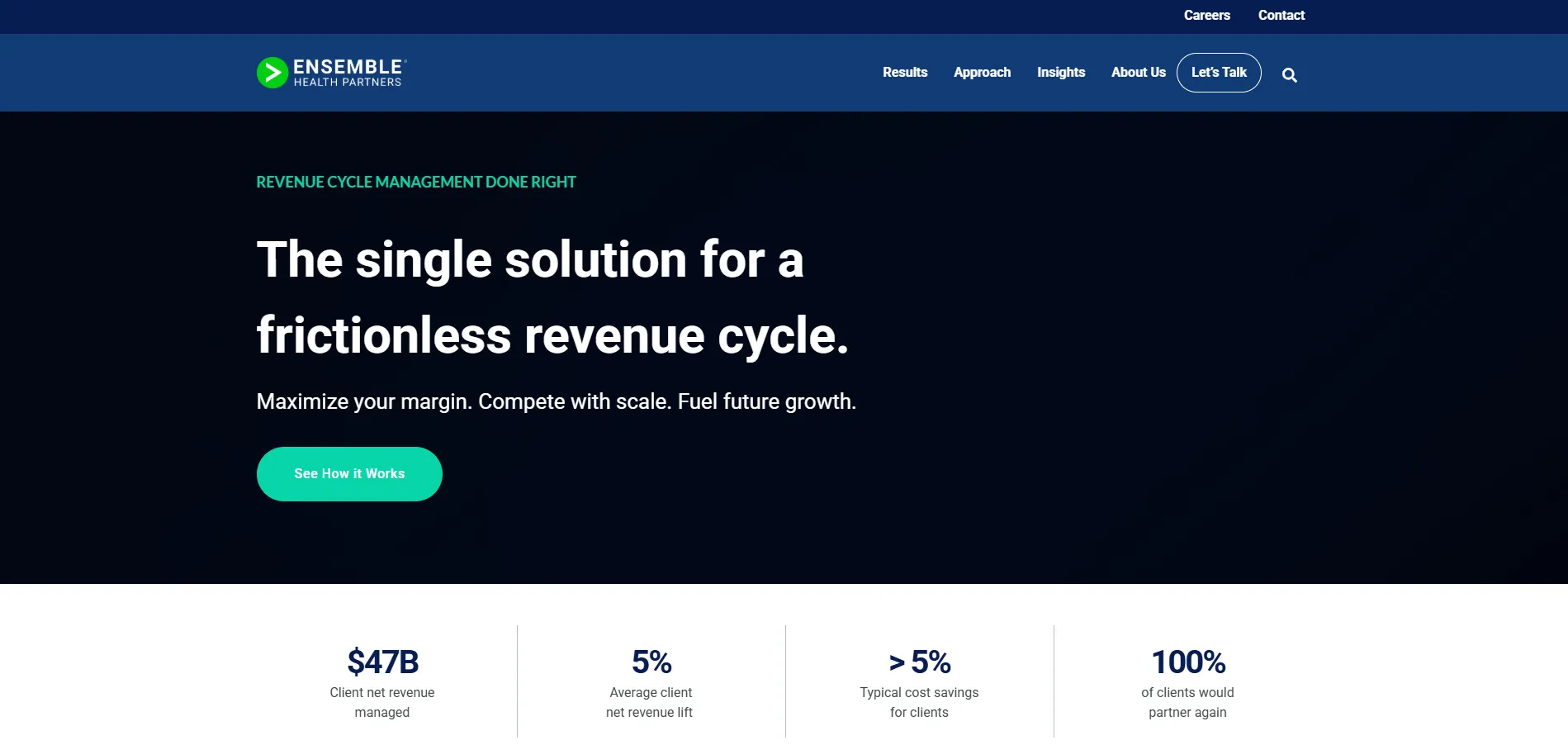
Founded in 2014 and headquartered in Cincinnati, Ohio, Ensemble Health Partners serves mid-sized to large health systems as an end-to-end RCM managed services partner. With approximately 10,000 employees and over $20 billion in annual client net patient revenue under management, Ensemble has earned Best in KLAS recognition for end-to-end revenue cycle outsourcing and was recognized as a Leader in the Everest Group RCM Operations PEAK Matrix assessment in 2024. The company prices on a fixed rate on collections with tiered performance incentives, directly aligning its own financial outcomes with those of its clients. In 2025, Ensemble expanded its Cohere partnership to build an RCM-native large language model.
Key details:
- Services: End-to-end RCM managed services, denial management and appeals, medical coding, patient access, revenue integrity, workflow analytics
- Best for: Mid-sized to large health systems that want a strategic outsourcing partner with outcome-based pricing, strong KLAS scores, and a track record of delivering measured net patient revenue improvement
- Locations: USA (1 country)
#5 athenahealth
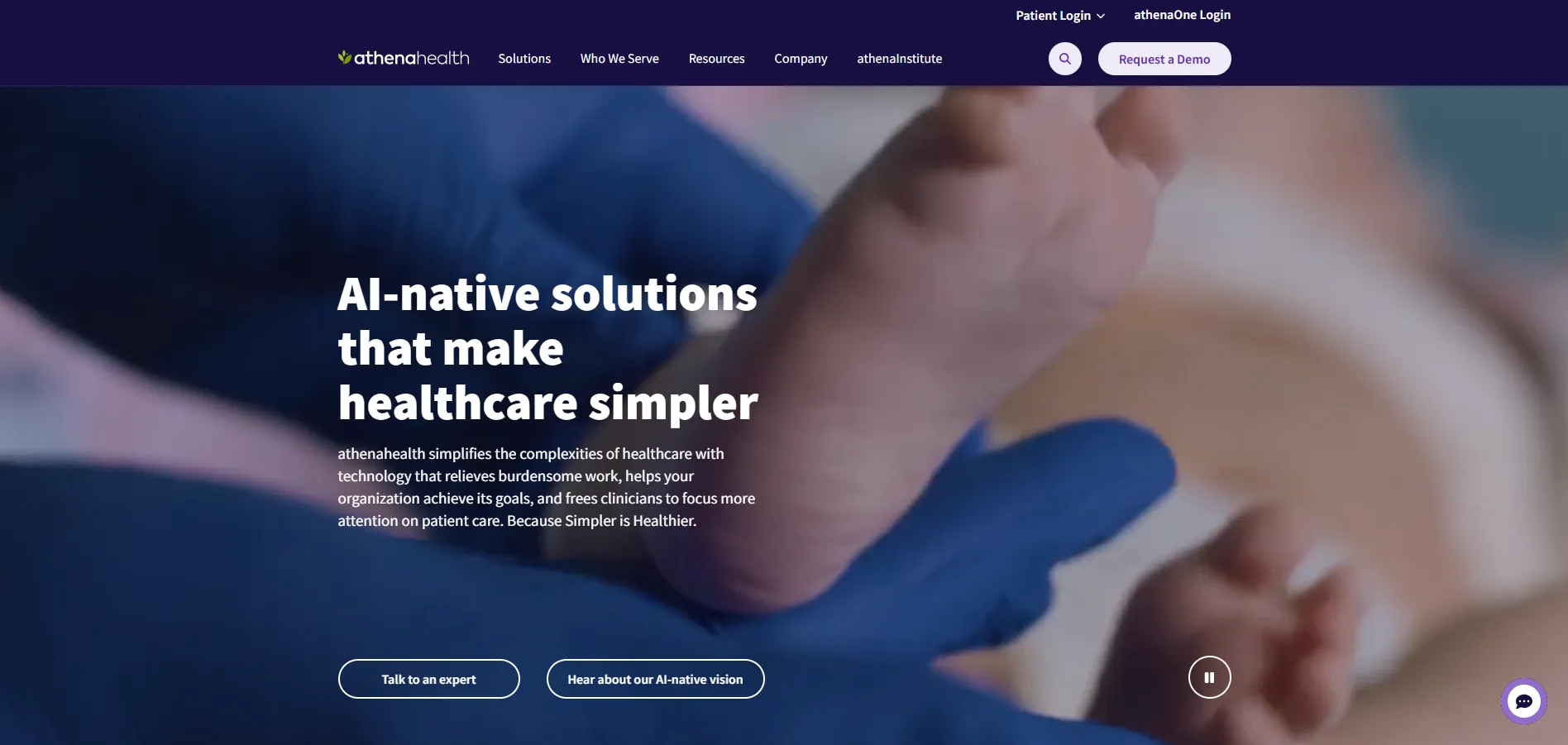
Founded in 1997 and headquartered in Boston, Massachusetts, athenahealth is a private company owned by Bain Capital and Hellman and Friedman, with approximately 8,483 employees. Its AI-native athenaOne platform connects 170,000 clinicians covering more than 20% of the US population, submitting over 315 million claims per year. athenahealth’s model combines EHR, practice management, and RCM in a single cloud-based platform with a network-enabled billing service that benefits from the collective intelligence of its provider community, improving payer rules libraries and clean claims rates across the network over time.
Key details:
- Services: Cloud-based EHR and RCM platform, claims management, denial management, prior authorization, patient engagement, population health, enterprise IDX billing for hospitals
- Best for: Ambulatory practices, physician groups, and mid-sized hospitals seeking a unified EHR and RCM platform with network-enabled billing intelligence and AI-driven administrative automation
- Locations: USA, India (2 countries)
#6 Optum
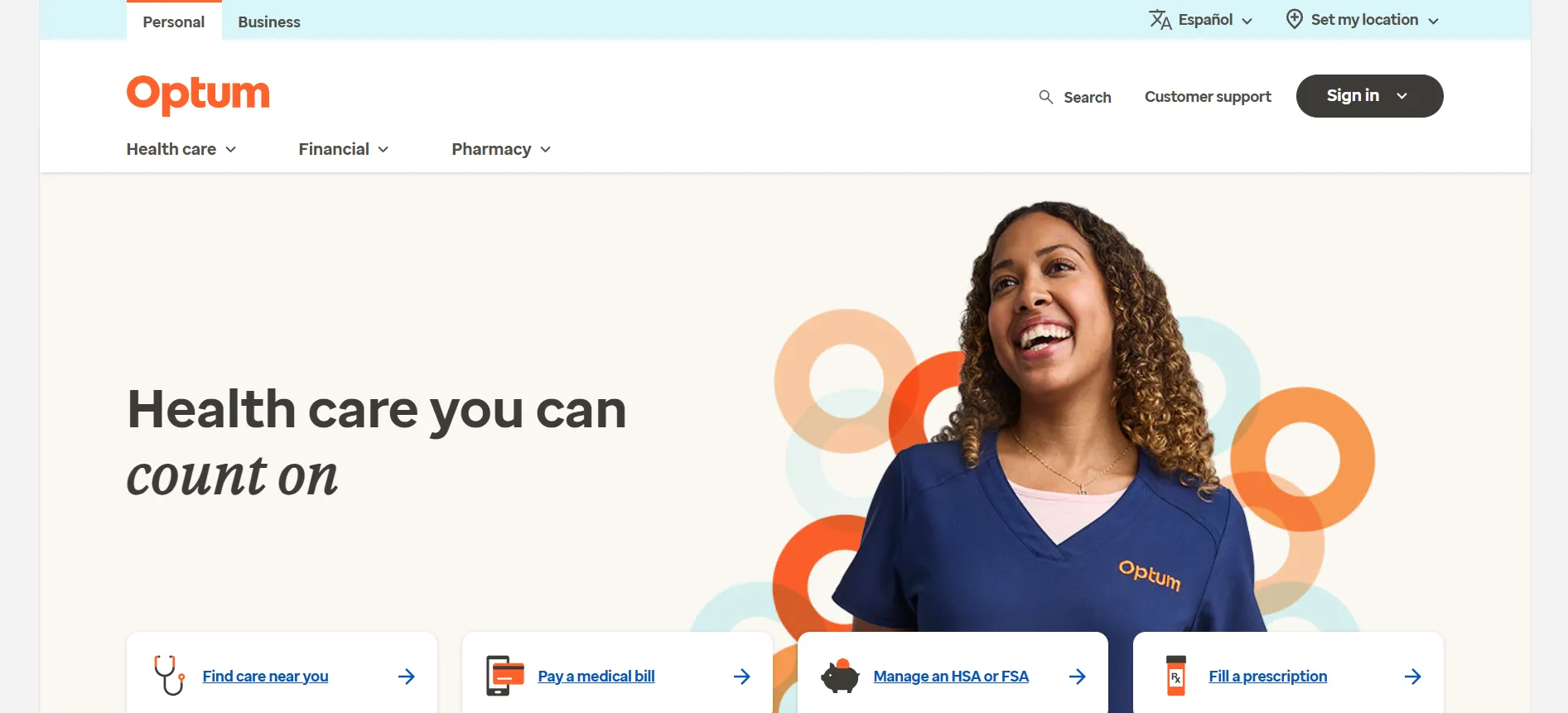
Optum is a health services company and subsidiary of UnitedHealth Group, headquartered in Eden Prairie, Minnesota, with more than 100,000 employees across health services divisions. Its RCM division processes more than 166 million cases per year and has been recognized as a Leader in the Everest Group RCM Platforms PEAK Matrix, the IDC MarketScape for US RCM Services, and the Frost and Sullivan Frost Radar RCM Operations in North America, all in 2025. The May 2025 launch of Optum Integrity One, an AI-powered platform integrating clinical language intelligence with revenue cycle functions, positions Optum as one of the most technologically advanced RCM providers in the enterprise segment.
Key details:
- Services: End-to-end RCM services, AI-powered clinical documentation integrity, medical coding, patient access, payer contract optimization, underpayment recovery, revenue cycle analytics
- Best for: Large health systems and academic medical centers seeking an enterprise-scale RCM partner with deep AI investment, a broad data network, and integration with broader health services capabilities
- Locations: USA (1 country)
#7 GeBBS Healthcare Solutions
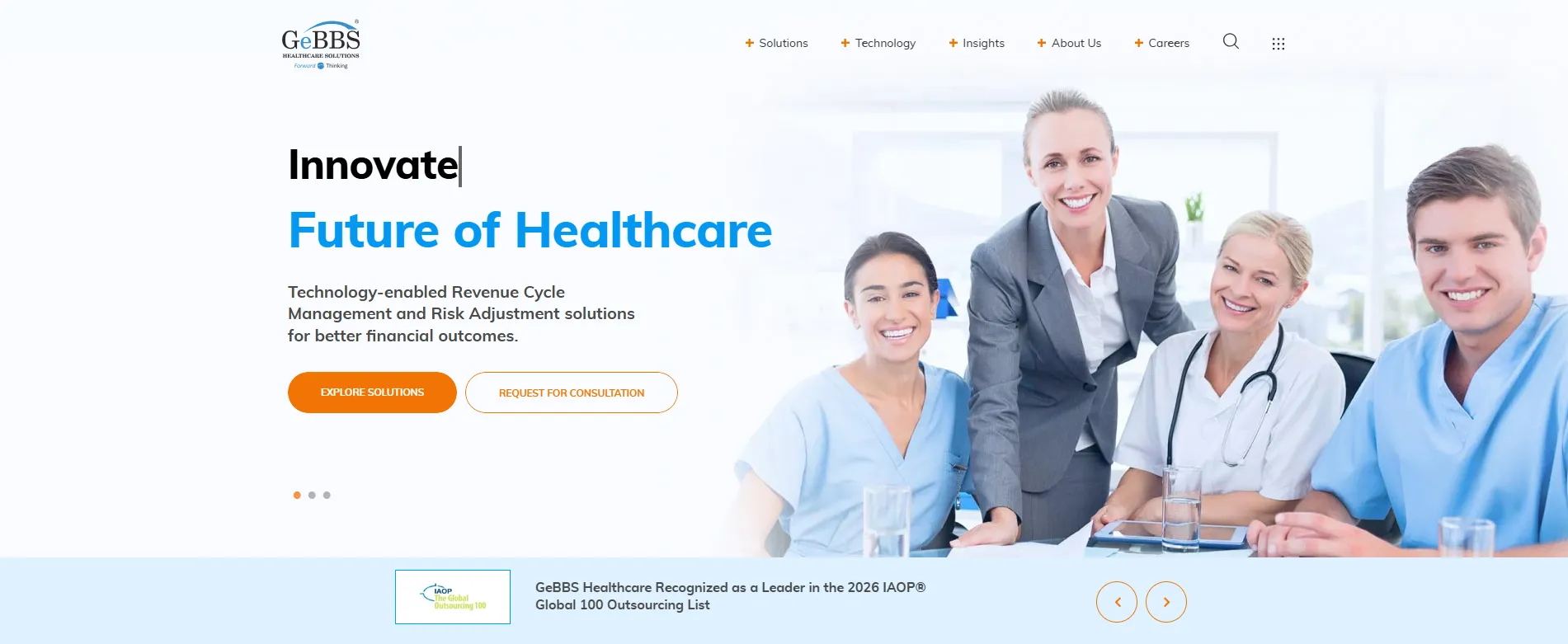
Founded in 2005 and headquartered in East Haven, Connecticut, GeBBS Healthcare Solutions employs more than 14,000 coding, billing, and RCM specialists across the US, India, and the Philippines, serving health systems, hospitals, and physician groups with KLAS-recognized medical coding and revenue cycle outsourcing. GeBBS received New Mountain Capital investment in 2025, adding resources for continued growth in automation and specialty coding depth. The company’s global delivery model across four countries, combined with its KLAS recognition for coding accuracy and AR management, makes it one of the most credentialed mid-to-large enterprise coding outsourcers in the market.
Key details:
- Services: Medical coding outsourcing, clinical documentation improvement, medical billing, AR management, risk adjustment, health information management
- Best for: Large healthcare organizations and hospital systems that need high-volume, specialty-specific coding expertise with KLAS-validated accuracy and a proven global delivery model
- Locations: USA, India, Philippines (3 countries)
#8 Conifer Health Solutions
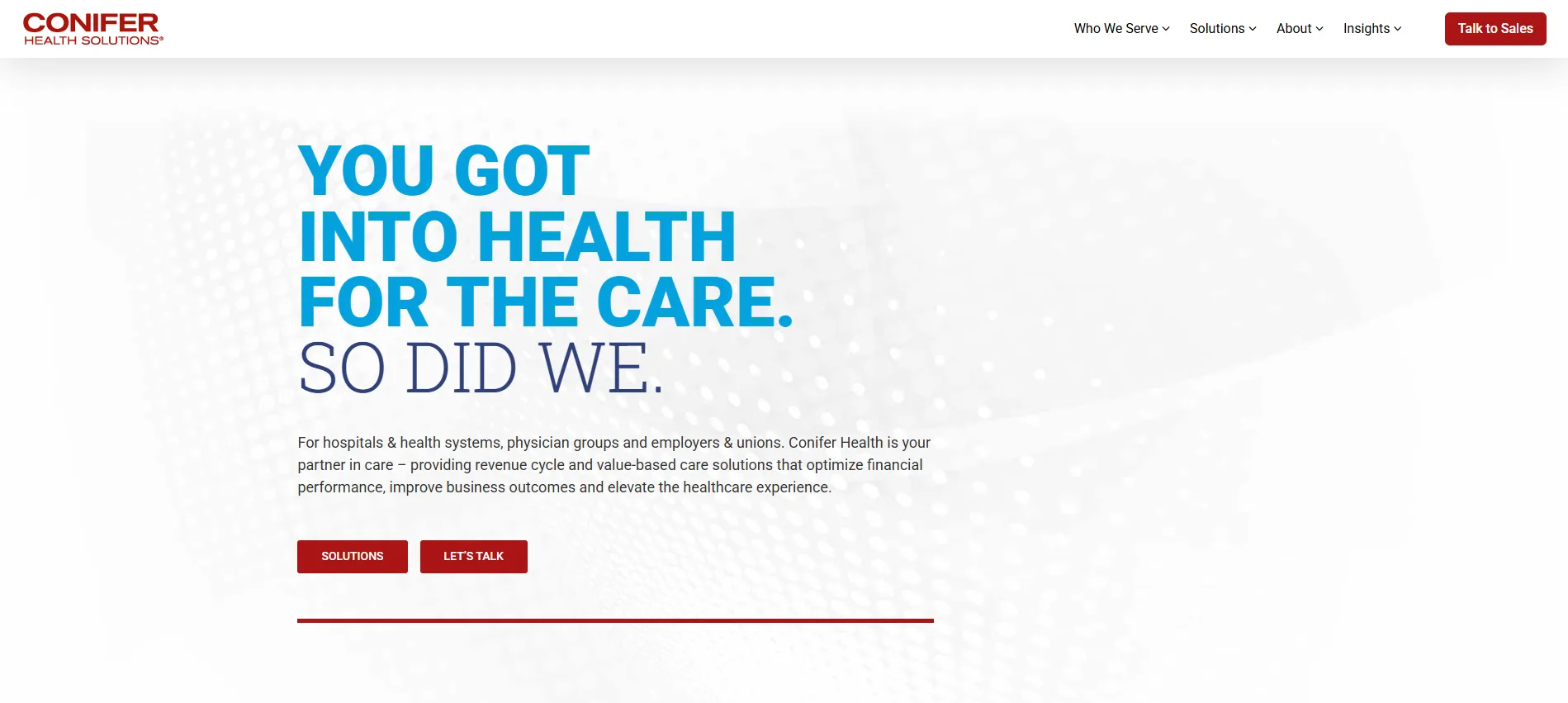
Founded in 2008 and headquartered in Dallas, Texas, Conifer Health Solutions is a Tenet Healthcare subsidiary that provides revenue cycle and value-based care services to hospitals, health systems, physician groups, employers, and unions. In February 2026, Tenet regained full ownership of Conifer as CommonSpirit Health exited its minority stake, consolidating the company under a single strategic direction. Conifer’s 2025 collaboration with Google Cloud to embed advanced AI across its RCM operations signals continued investment in automation, and the company serves as an established choice for health systems that want a full-cycle outsourcing partner with long operational history and national coverage.
Key details:
- Services: Full-cycle RCM outsourcing, patient access, denial management, coding, value-based care financial services, technology-enabled managed services
- Best for: Hospitals and health systems seeking a full-cycle RCM outsourcing partner with deep operational experience across complex inpatient billing environments and a national service footprint
- Locations: USA (1 country)
#9 Experian Health
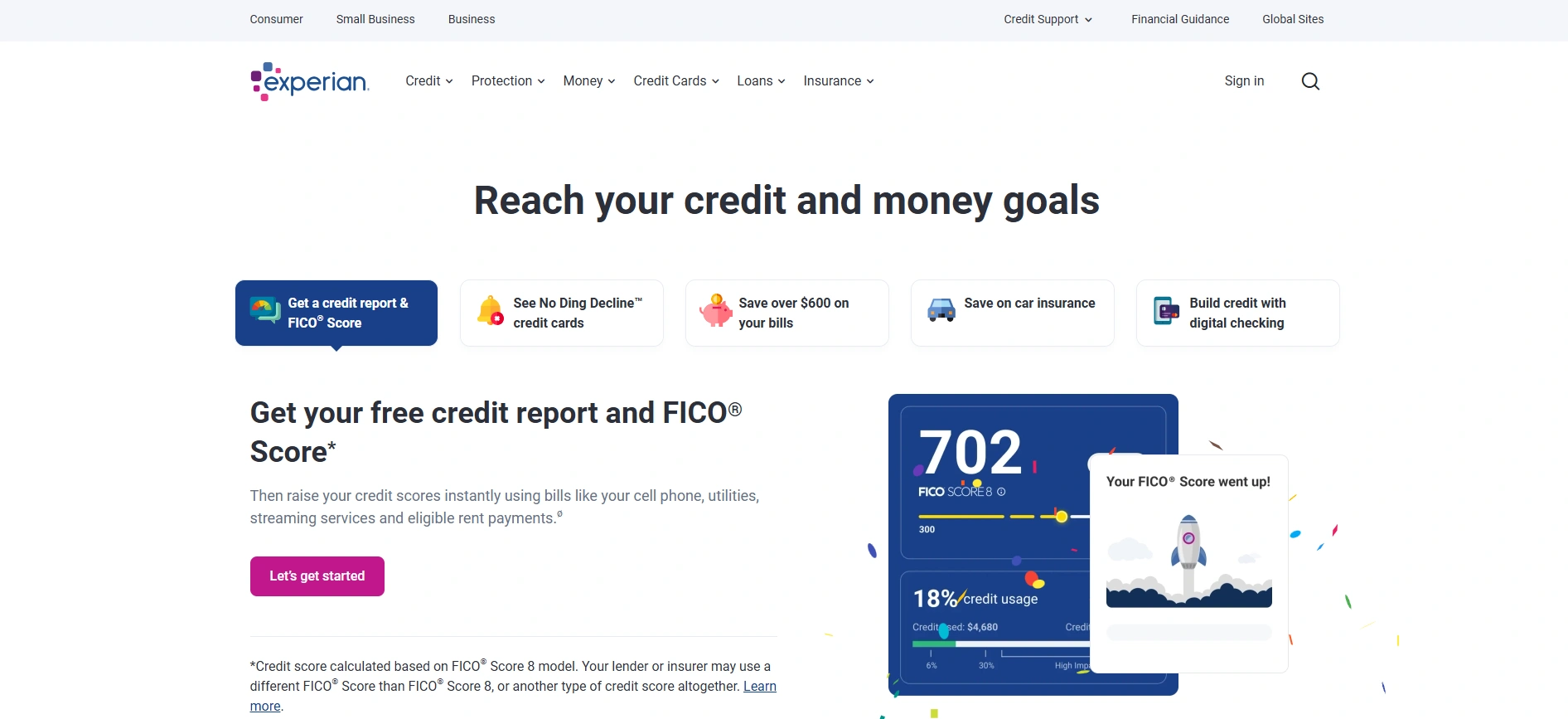
Experian Health is the healthcare division of Experian, headquartered in Franklin, Tennessee, and one of the most technology-focused patient access and claims management vendors in the market. With connections to 2,700+ payers and processing of 175 million claims annually, Experian Health’s RCM platform draws on Experian’s consumer credit and identity data as a structural differentiator for eligibility verification and patient financial propensity scoring. Its 2025 launch of Patient Access Curator and AI Advantage, two AI-powered denial prevention tools, reflects the company’s focus on solving the front-end data quality problems that cause the majority of preventable denials.
Key details:
- Services: Patient access, eligibility verification and benefits checking, claims management, AI-powered denial prediction and prevention, identity management, payer contract management, patient collections
- Best for: Providers seeking to eliminate front-end registration errors that cause downstream denials, particularly organizations with complex payer mixes that benefit from Experian’s consumer data and identity verification capabilities
- Locations: USA (1 country)
#10 CareCloud
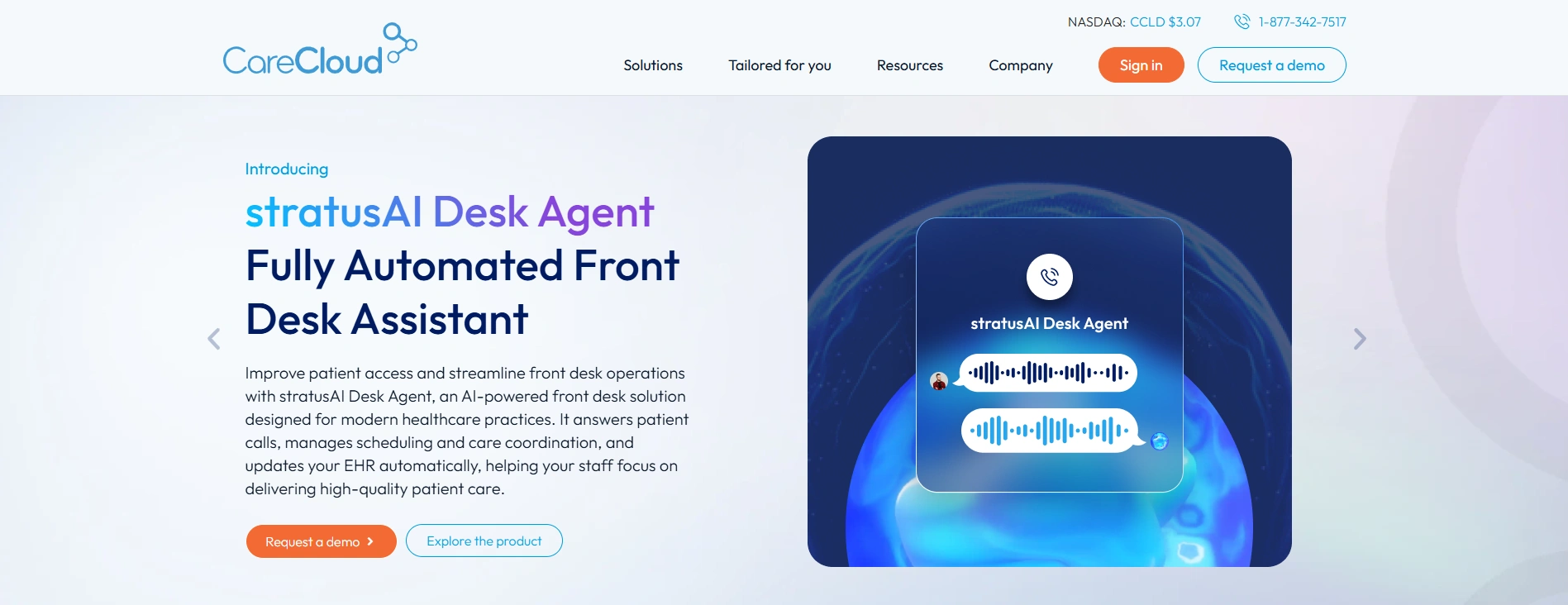
Founded in 1999 as Medical Transcription Billing Corporation (MTBC) and rebranded as CareCloud in 2021, this publicly traded company (NASDAQ: CCLD) is headquartered in Somerset, New Jersey, with approximately 4,000 employees across the US, Pakistan, and Sri Lanka. CareCloud’s cloud-based platform combines revenue cycle management, practice management, EHR, patient experience management, and robotic process automation in a single suite. The company’s RCM clients report denial rates below 3% and a 97% first-time pass rate, making it one of the performance benchmarks for mid-market medical group billing programs.
Key details:
- Services: Cloud-based RCM SaaS, medical billing outsourcing, practice management, EHR, patient experience management, robotic process automation, charge entry, denial and AR management
- Best for: Small to mid-sized medical groups and specialty practices seeking an all-in-one cloud platform that combines billing software with optional outsourced billing services and strong analytics visibility
- Locations: USA, Pakistan, Sri Lanka (3 countries)
Helpware CX: Our Top Choice for Healthcare Billing Operations Support
What separates Helpware CX from every other company on this list is not a software platform or a proprietary claims engine. It is the operational support layer that converts billing technology investments into consistent, daily execution. Health systems and digital health companies consistently find that their RCM software generates the right workflows, but the people to work those workflows, handle exceptions, annotate data, and keep operations running at scale are harder to sustain in-house than the platform itself.
Founded in 2015 and headquartered in Lexington, Kentucky, Helpware CX serves healthcare organizations through its HIPAA-compliant healthcare BPO services, covering back-office billing operations, clinical data entry and processing, AI training data annotation for RCM machine learning models, and data science solutions that support denial prediction and autonomous coding programs. With 19 offices across 11 countries, 4,000 team members, and support in 45 languages, Helpware CX brings both the geographic reach and compliance infrastructure that regulated healthcare billing environments demand.
In practice, Helpware’s healthcare billing clients rely on it for claims data preparation and submission support, insurance verification processing, medical record and documentation review, patient data entry and eligibility support, and the AI training data work that increasingly underlies modern denial prevention platforms. Its 90% CSAT score, 2.8% monthly attrition rate versus the 6 to 8% industry average, and 5-year average client partnerships reflect the operational stability that HIPAA-regulated billing programs require.
What sets Helpware CX apart for healthcare billing support:
- HIPAA, SOC 2 Type II, and GDPR certification across all healthcare data handling environments
- 45 languages with native-speaker support for multilingual patient populations and global billing workflows
- 5-year average client partnerships versus the 1 to 2 year industry norm
- AI data annotation capabilities for clinical NLP and denial prediction model development
- Scalable engagement from pilot programs of 30 to 60 days through enterprise teams of 500 or more
Pricing Models for Healthcare Billing Services
Healthcare billing pricing varies significantly by vendor model, service scope, and organization size. Understanding the four primary structures before entering vendor conversations puts you in position to compare total cost of ownership rather than headline rates.
Common pricing models include:
- Percentage of net collections: The most common model for full-service billing outsourcing, typically ranging from 4 to 8% of net collections depending on specialty and complexity. This aligns the vendor’s incentives with your revenue, but costs scale with collections volume, which can become expensive as your practice grows.
- Per-claim fee: Flat fees per claim submitted, typically ranging from $3 to $8 per claim for standard billing services. Well-suited for high-volume practices that want predictable costs independent of collections performance.
- Monthly SaaS subscription: Software-first platforms such as Waystar, athenahealth, and CareCloud charge monthly per-provider or per-seat fees for platform access. Implementation and onboarding fees are separate and often add 20 to 40% to first-year costs.
- Per-FTE managed services: BPO providers including Helpware price on a per-full-time-equivalent-per-month basis, typically from $1,500 to $4,000 per FTE depending on specialization, location, and service tier.
For organizations combining a software platform with outsourced billing support, Helpware’s healthcare back-office services start at $8 to $15 per hour, offering a practical complement to any of the software-first platforms on this list.
Unlock your hidden CX savings with Helpware
Get ROI projection for current support needs.
-40% annually
/monthly costs with Helpware
vs
/internal team costs (approx)
Your requirements fall outside our standard parameters.
Let's discuss your results
Fill in your details to schedule a consultation.
-40% annually
/monthly costs with Helpware
vs
/internal team costs (approx)
Your requirements fall outside our standard parameters.
-40% annually
/monthly costs with Helpware
vs
/internal team costs (approx)
Your requirements fall outside our standard parameters.
Support staff included in the package:
Shared Team Leader
Shared L&D Specalist
Shared QA Specialist
Account Executive by default
Shared Ops Delivery Manager
Admin/Finance/Legal support for the agents by default
1-2 Dedicated Team Leaders
Shared L&D Specialist
Shared to 1 Dedicated QA Specialist
Shared Ops Manager
Account Executive by default
Admin/Finance/Legal support for the agents by default
Shared Real Time Analyst
2-5 Dedicated Team Leaders
0,5 to 1,5 Dedicated L&D Specialists
1-2 Dedicated QA Specialists
Up to half of a dedicated Ops Manager
Account Executive by default
Admin/Finance/Legal support for the agents by default
1 Dedicated Real Time Analyst
Ready to get a personalized estimate for your team?
Contact us for a personalized assessment tailored to your specific needs.
*These projections are estimates for informational purposes only and do not represent a formal offer. Contact us for a personalized quote.
Thank you!
You’ll hear from us within one business day.