








Chargebacks have become one of the biggest hidden costs in online commerce. According to Mastercard’s 2026 research with Datos Insights, global chargeback volume is expected to grow by 37% between 2025 and 2029, reaching 359 million cases per year.
Each chargeback costs merchants an average of $128 in fees, labor, and lost time. For growing ecommerce businesses and fintech companies, those costs add up quickly. Chargebacks also create compliance risks, since card networks can penalize merchants with high dispute rates. As a result, chargeback management services have become an important part of running a payments business. This guide looks at nine leading providers for 2026, explains the main service models, and helps you find the right fit.
What Chargeback Management Services Actually Do
Chargeback providers solve different parts of the problem, and understanding those differences is important when comparing options. Most services fall into four categories.
- Prevention and alert services notify merchants when a dispute is about to happen, giving them a chance to issue a refund or resolve the issue before it turns into a chargeback.
- Recovery and representment services step in after a chargeback has been filed. They gather evidence, prepare responses, and fight disputes to recover lost revenue.
- Guarantee providers focus on fraud prevention. They approve or decline transactions and reimburse merchants when an approved order later results in a fraud-related chargeback. This shifts much of the fraud risk to the provider.
- Managed services provide a team that handles chargeback work on the merchant’s behalf instead of giving merchants software to operate.
These differences matter more than ever in 2026 as card networks tighten their rules. Visa’s Acquirer Monitoring Program now flags merchants at lower chargeback levels than previous programs, with the excessive threshold reduced to 0.9% as of January 2026. Pre-dispute resolutions are excluded from that calculation, making prevention tools valuable for more than just recovering revenue. Many businesses end up using a combination of services to keep dispute rates under control.
How Chargeback Management Pricing Works
Pricing models vary widely, so it’s important to understand how providers charge before comparing costs.
- Success-based pricing is common among recovery providers. You pay a percentage of the money recovered, often around 20% to 25%. Since fees are tied to successful recoveries, the provider only gets paid when you do.
- Per-alert pricing is typically used by prevention networks. Merchants pay a fixed fee for each dispute alert that allows them to resolve an issue before it becomes a chargeback.
- Per-case pricing charges a set amount for every dispute handled, regardless of the outcome. This model can work well for businesses with strong internal win rates.
- Guarantee services usually charge a percentage of approved transaction value. In effect, you’re paying for protection against fraud chargebacks. The coverage can be attractive, but the fee applies to many legitimate orders, not just disputed ones.
- Managed service providers and BPOs generally charge by agent, team, or monthly service package. This approach appeals to companies that want dedicated support and predictable costs instead of paying per dispute.
Before signing any agreement, review setup fees, minimum commitments, and contract terms. Those details can have a bigger impact on total cost than the advertised rate.
The 9 Best Chargeback Management Services for 2026 at a Glance
Here is how the nine providers compare before the detailed breakdowns below. Order reflects approach, not a strict ranking, since the best fit depends on your business.
| Provider | Approach | Best For | Pricing Model | Founded |
|---|---|---|---|---|
| Helpware | Managed dispute operations (BPO) | Teams that want people to run disputes and fraud work | Per-agent, managed service | 2015 |
| Chargeflow | End-to-end recovery automation | Ecommerce stores on Shopify, Stripe, PayPal | Success-based, share of recovered funds | 2020 |
| Justt | AI representment, full service | Enterprises with heavy dispute volume | Performance-based, custom | 2020 |
| Disputifier | Recovery and prevention automation | Small and mid-size Shopify merchants | 20% of each won chargeback, capped | 2022 |
| Chargebacks911 | Full-service prevention and remediation | High-volume and high-risk merchants | Custom | 2011 |
| Kount (an Equifax company) | Fraud prevention plus chargeback management | Enterprises wanting one fraud-to-dispute platform | Custom, enterprise | 2007 |
| Verifi (a Visa company) | Pre-dispute prevention and alerts | Merchants resolving Visa disputes early | Network and per-alert | 2005 |
| Signifyd | Chargeback guarantee plus recovery | Stores wanting a liability shift | Share of approved order value | 2011 |
| Riskified | Chargeback guarantee plus Dispute Resolve | Large enterprise ecommerce | Share of approved order value | 2013 |
Best for Managed Dispute Operations
Some businesses don’t want another platform to manage. They want experienced people to handle disputes, fraud reviews, and chargeback recovery for them. That’s where managed dispute operations make sense.
Helpware

A BPO provider that manages chargeback and dispute operations through dedicated teams.
Helpware takes a service-led approach to chargeback management. Founded in 2015 and headquartered in Lexington, Kentucky, the company provides customer experience and back-office support through more than 4,000 team members across 19 locations in 11 countries.
Its back-office services include dispute and chargeback support for ecommerce platforms such as Shopify, Amazon, and Magento, along with returns and claims processing. Within its banking and fintech practice, Helpware also handles transaction monitoring, fraud prevention, card lifecycle support, and compliance workflows related to PCI DSS, KYC, and AML requirements.
Instead of providing software for your team to operate, Helpware supplies trained specialists who collect evidence, prepare representment cases, submit disputes through payment processors, and monitor fraud trends. The team works within your existing processes and customer experience standards.
Why it’s on the list
Helpware is a strong option for businesses that want to outsource chargeback operations completely. Human review can be especially valuable in complex disputes, fraud investigations, and regulated financial environments where automated tools may miss important details.
The company reports a 90% CSAT score, a 2.8% monthly attrition rate, and client partnerships that average more than five years.
- Services offered: Dispute and chargeback support, claims and returns processing, transaction monitoring and fraud prevention, card lifecycle management, customer support, and compliance back-office work.
- Pros: Trained people who blend automation with human review. Coverage in 45+ languages across 19 global locations. SOC 2, HIPAA, GDPR, and PCI DSS aligned. Average client partnerships over five years.
- Cons: Not a self-serve SaaS platform, so you do not get a one-click app. Consultative onboarding takes longer than installing a plugin. Priced above offshore commodity vendors.
- Best for: Mid-market to enterprises stores and fintechs that want a managed team to own dispute operations and fraud work operations end to end.
- Pricing: Per-agent or managed-service pricing based on scope.
- Founded: 2015
- Headquarters: Lexington, Kentucky, United States
Best for Automated Dispute Recovery
If your main goal is recovering lost revenue, automated dispute recovery tools are worth a close look. These platforms collect evidence, prepare responses, submit disputes, and improve their approach based on past results.
Chargeflow
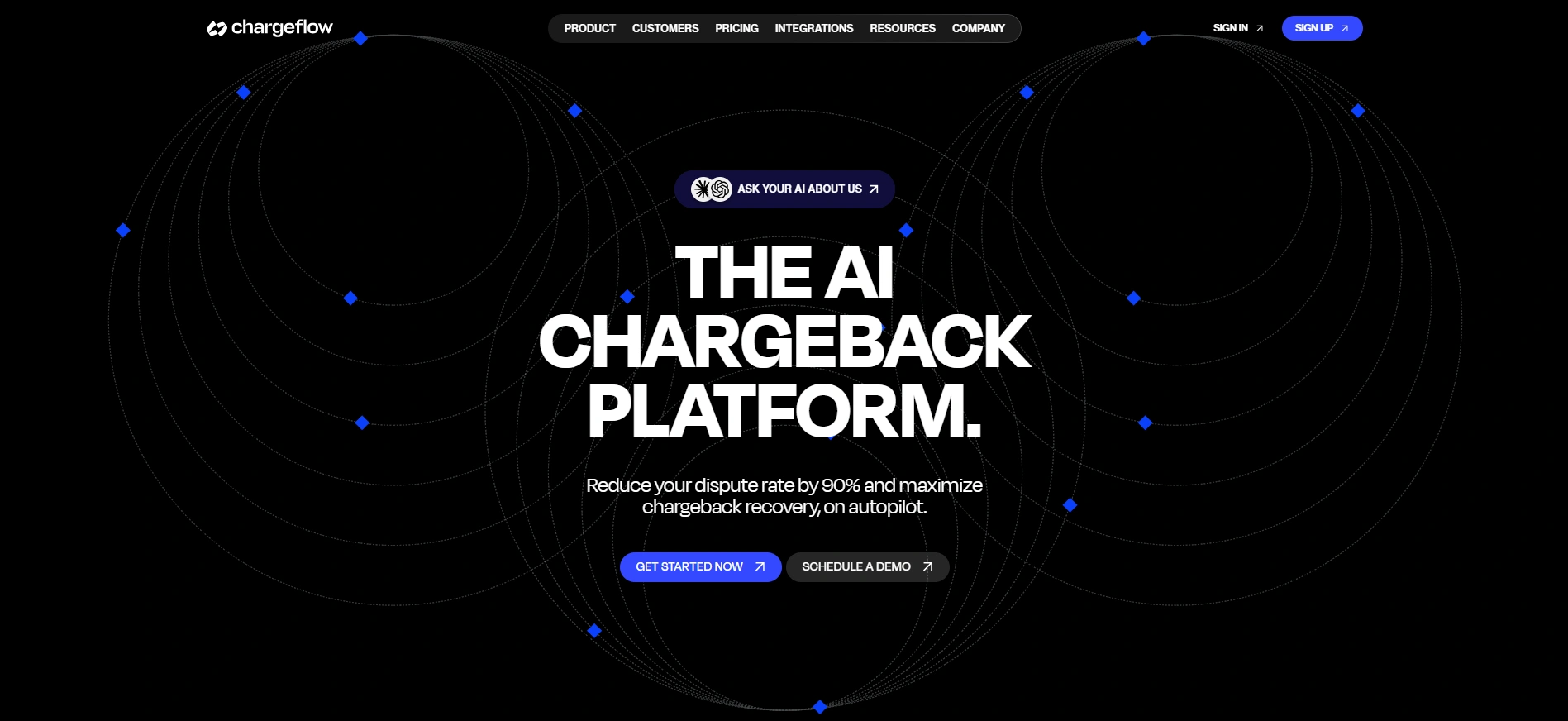
Hands-off chargeback recovery built for online stores, billed mostly on what it wins back.
Chargeflow is built for online merchants that want to automate the entire dispute process. Founded in 2020 by brothers Ariel and Avia Chen, the company is headquartered in Modi’in, Israel, with an office in New York and teams across the United States, the Philippines, and Poland. It connects with more than 100 payment, ecommerce, and data platforms, including Shopify, Stripe, PayPal, WooCommerce, and Adyen.
The company reports recovering over $100 million in disputed revenue for approximately 20,000 merchants. Its AI gathers evidence from multiple sources, evaluates each dispute, creates a response package, and submits it automatically.
Why it’s on the list
Chargeflow makes chargeback recovery simple for growing ecommerce businesses. Its success-based pricing keeps costs tied to results, and its $35 million Series A funding round in late 2025 highlights strong market traction.
- Services offered: Automated representment, friendly-fraud prevention, chargeback alerts, and analytics across card networks.
- Pros: Genuinely hands-off automation. Deep ecommerce integrations. Pay mostly when disputes are won. Large merchant data network feeding the models.
- Cons: Some merchants on the Shopify App Store report the revenue-share fee adds up on high-ticket orders. Best suited to ecommerce rather than complex enterprise billing.
- Best for: Direct-to-consumer and ecommerce brands that want recovery on autopilot.
- Pricing: Success-based. Its Shopify listing shows automation priced at roughly 25% of recovered chargebacks, with prevention and alerts billed separately.
- Founded: 2020
- Headquarters: Modi’in, Israel, and New York
Justt
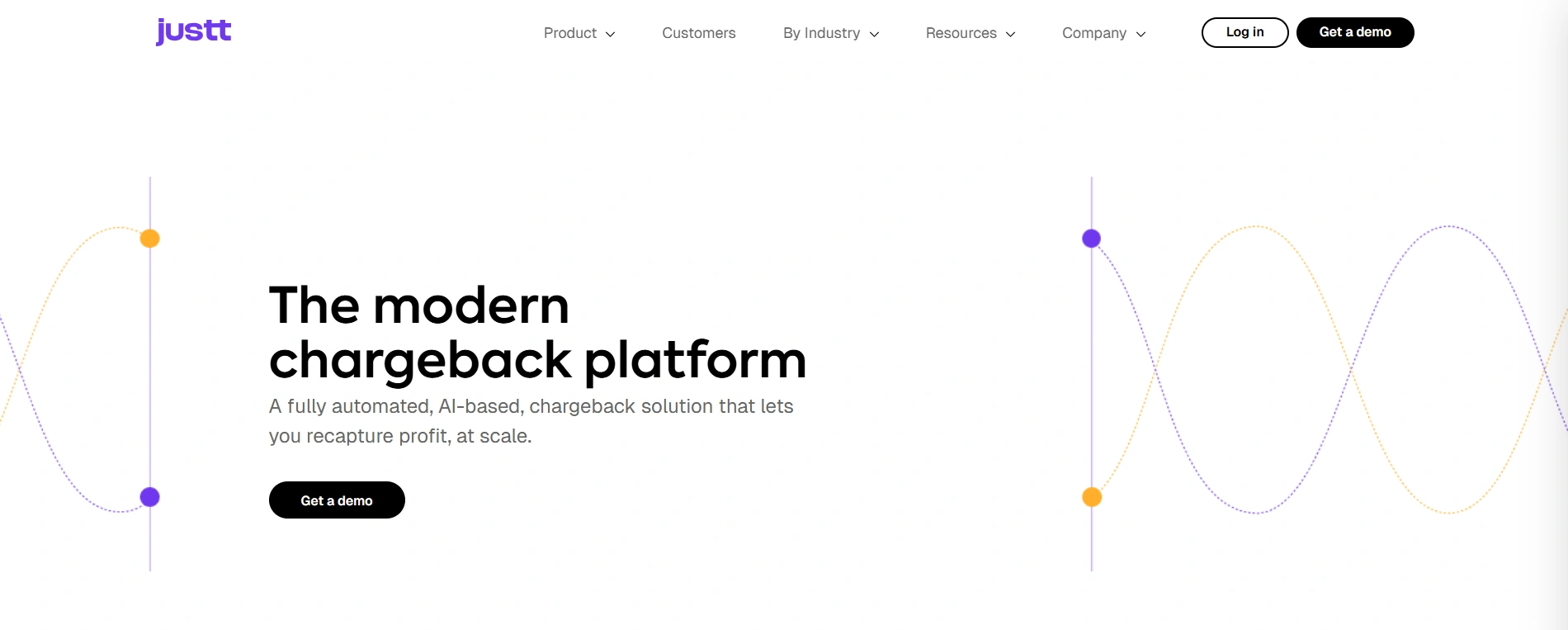
An AI-powered representment platform designed for businesses with large dispute volumes.
Where Chargeflow leans toward ecommerce, Justt focuses on merchants handling significant numbers of chargebacks. Founded in 2020 in Tel Aviv by Ofir Tahor and Roenen Ben-Ami, the company was previously known as AcroCharge. It has raised more than $100 million and serves over 250 enterprise merchants along with thousands of smaller businesses.
The platform connects directly to payment service providers, enriches disputes with third-party data, and builds customized evidence packages. Its machine-learning system continuously tests and improves responses over time. Justt integrates with more than 40 PSPs, including Stripe, PayPal, and American Express.
Why it’s on the list
Justt is built for scale. It can handle anything from a small number of disputes to hundreds of thousands, while continuously improving recovery performance using a merchant’s own dispute history.
- Services offered: End-to-end automated representment, dispute optimization, multilingual dispute management, and reporting across PSPs.
- Pros: Fully managed evidence creation. Self-improving machine learning. Strong fit for cross-border and high-volume operations. Centralized approvals across multiple processors.
- Cons: Geared to enterprises, so it can be more than a small store needs. Heavy automation means less hands-on control over individual cases.
- Best for: Mid-market and enterprise merchants with high, complex dispute volume.
- Pricing: Performance-based and custom.
- Founded: 2020
- Headquarters: Tel Aviv, Israel
Disputifier
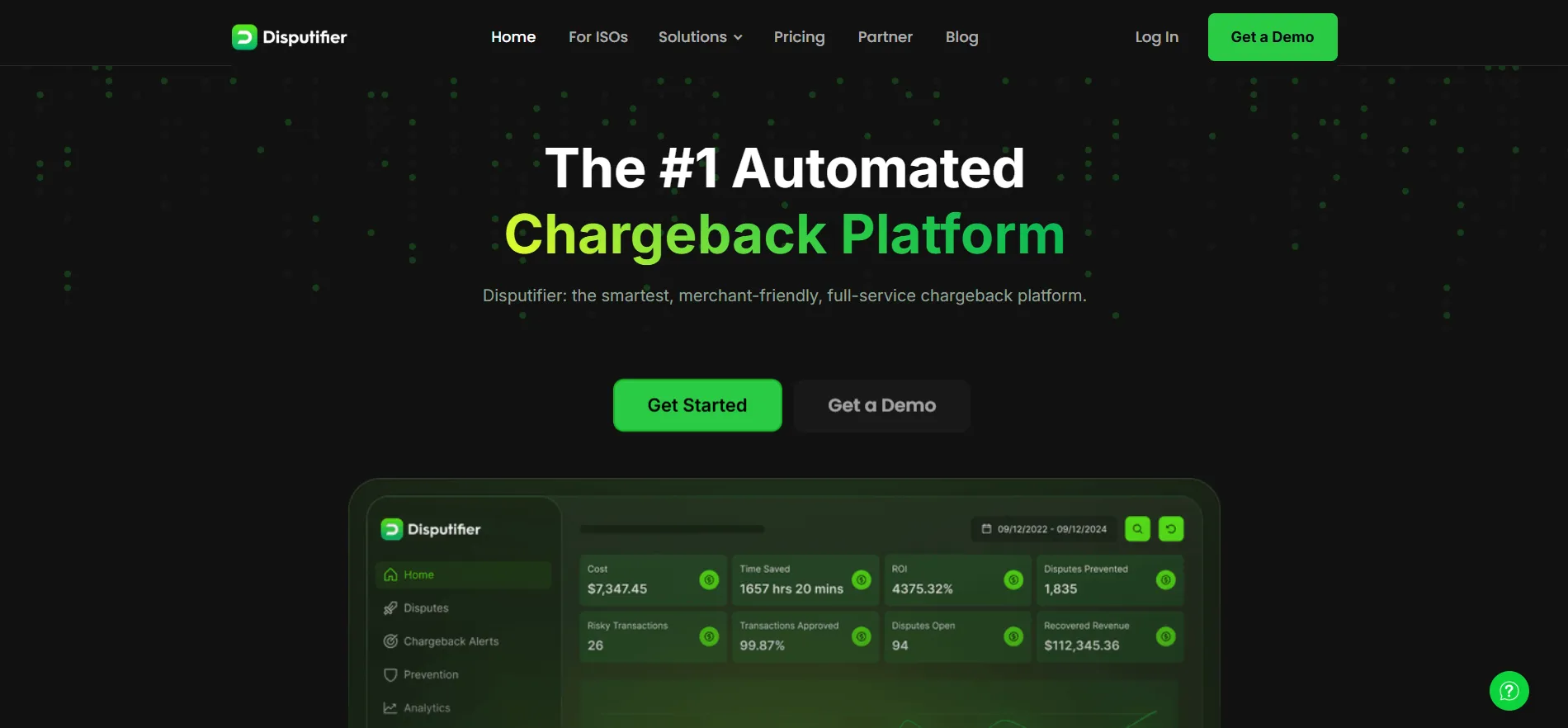
A Shopify-first app that fights and prevents chargebacks on success-based pricing.
Disputifier was built with Shopify merchants in mind and remains heavily focused on that market. Founded in 2022 by Mark Wagner, the platform automates chargeback responses using customized evidence packages. It also includes fraud prevention tools, shipping notifications, and pre-dispute alerts through programs such as RDR, Ethoca, and Order Insight. The platform works with all payment processors, requires no long-term contract, and charges only when a dispute is won.
Why it’s on the list
Disputifier offers a straightforward entry point for small and mid-sized ecommerce businesses. Its pay-for-results pricing and fee cap make costs predictable, especially for merchants selling higher-value products.
- Services offered: Automated chargeback recovery, chargeback alerts, fraud prevention, and order-not-received prevention.
- Pros: No contracts, setup fees, or cancellation fees. Success-based pricing with a per-win cap. Easy Shopify setup. Broad alert coverage.
- Cons: Founded only in 2022, so it has a shorter track record. Merchant reviews are mixed on effectiveness and billing, and the company disclosed a January 2026 security incident affecting Shopify API tokens for a small number of merchants.
- Best for: Small to mid-size Shopify merchants wanting affordable, automated coverage.
- Pricing: 20% of each won chargeback, capped at $250 per win. Fraud and order-not-received prevention are priced separately.
- Founded: 2022
- Headquarters: United States
Best for Full-Service and Enterprise Coverage
Larger merchants and high-risk businesses often prefer a provider that handles prevention, dispute recovery, and analytics in one place. These two companies offer some of the broadest coverage in the market.
Chargebacks911
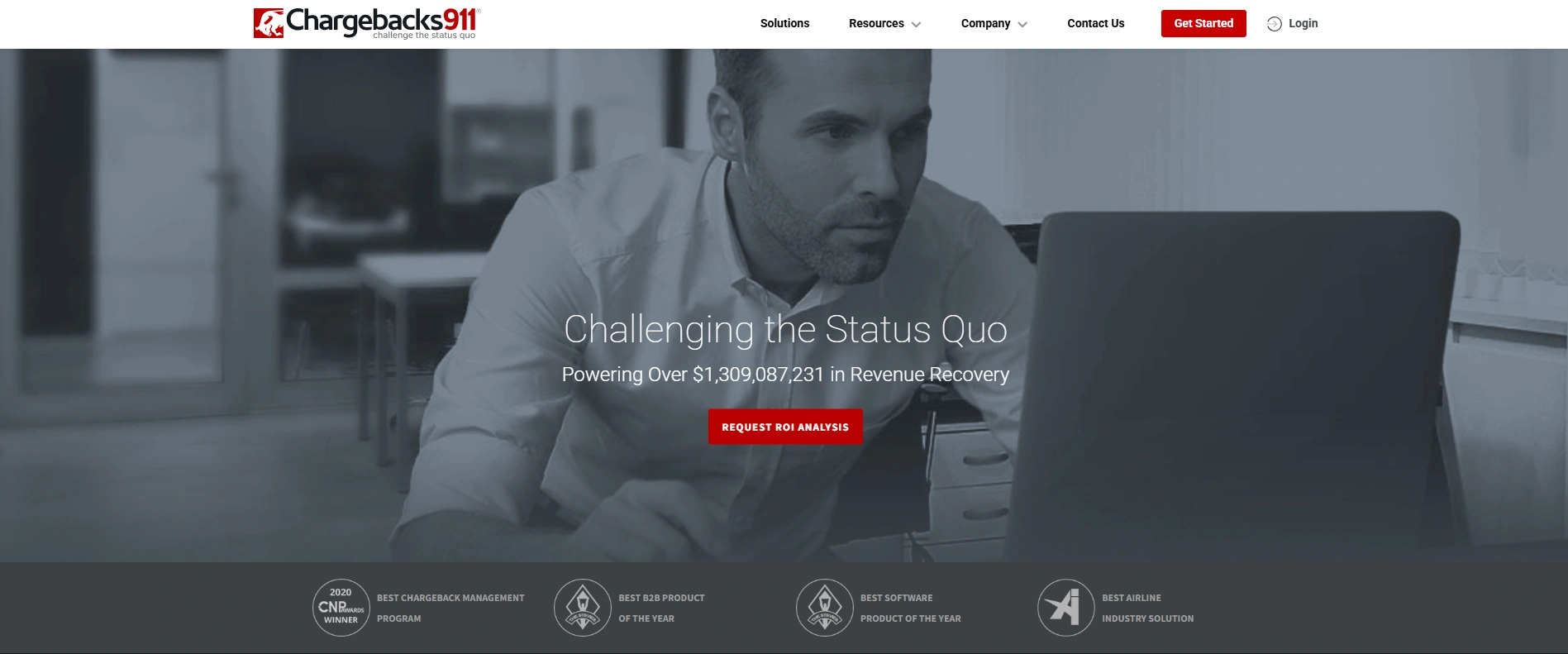
A long-running, full-service partner for high-volume and high-risk merchants.
Chargebacks911 is one of the most established companies in the industry. Founded in 2011 in Clearwater, Florida, by Monica Eaton and Gary Cardone, it has grown to around 400 employees. The company says it has monitored more than 15 billion transactions across 87 countries and recovered over $1 billion in disputed revenue.
Its services cover chargeback prevention, dispute management, and analytics that help identify the root causes of disputes. The platform also combines alerts from CDRN and Ethoca into a single dashboard. Through its sister company, Fi911, it also serves banks and acquiring institutions.
Why it’s on the list
Chargebacks911 offers broad coverage across the entire dispute lifecycle and brings more than a decade of experience to the table. It is a strong option for businesses with complex payment operations or elevated chargeback risk.
Buyers should, however, also be aware that the company settled a 2023 lawsuit from the FTC and the state of Florida for $150,000 without admitting wrongdoing and consider that alongside its industry track record.
- Services offered: Dispute prevention, dispute response and representment, alerts management, and source-detection analytics.
- Pros: Deep experience and large scale. Combined prevention and recovery. Broad alert coverage. Strong fit for high-risk verticals.
- Cons: Custom pricing is less transparent than success-based apps. A past regulatory settlement is worth diligence for compliance-sensitive buyers.
- Best for: High-volume and high-risk merchants wanting an experienced end-to-end partner.
- Pricing: Custom.
- Founded: 2011
- Headquarters: Clearwater, Florida, United States
Kount (an Equifax Company)
Fraud prevention and chargeback management on one enterprise platform, now including Midigator.
Kount starts with fraud prevention and extends into chargeback management. Founded in 2007 in Boise, Idaho, the company was acquired by Equifax in 2021. Its Identity Trust Global Network uses data from billions of digital interactions and transactions across more than 200 countries to help assess risk.
Equifax expanded Kount’s capabilities in 2022 with the acquisition of Midigator, a chargeback management platform. The Midigator technology is now being integrated into Kount, bringing fraud screening and dispute management together in one system.
Why it’s on the list
For enterprises that want to manage fraud and disputes through a single vendor with deep data, the combined Kount and Midigator platform offers broad coverage, plus access to Equifax’s large data network.
- Services offered: Pre-authorization fraud prevention, automated chargeback representment, dispute management, and chargeback analytics.
- Pros: End-to-end fraud-to-dispute coverage. Large identity and fraud data network. Strong analytics for root-cause work. Enterprise-grade backing.
- Cons: Enterprise pricing and procurement. The Midigator-to-Kount transition adds some change for existing users. Heavier to set up than a plug-in app.
- Best for: Enterprises that want one platform from fraud screening through dispute resolution.
- Pricing: Custom, enterprise.
- Founded: 2007
- Headquarters: Boise, Idaho, United States, part of Equifax
Best for Stopping Disputes before They Become Chargebacks
The lowest-cost chargeback is the one that never happens. Prevention tools help merchants resolve issues before they turn into formal disputes.
Verifi (a Visa Company)
A Visa-backed prevention platform focused on resolving disputes early.
Verifi helps merchants address disputes before they become chargebacks. Founded in 2005 in Los Angeles and acquired by Visa in 2019, the company offers three main products:
- Order Insight shares transaction and order details with card issuers so customers can quickly recognize legitimate purchases.
- The Cardholder Dispute Resolution Network (CDRN) sends alerts when a customer questions a charge, giving merchants time to issue a refund or resolve the issue.
- Rapid Dispute Resolution automates refunds for eligible Visa transactions based on rules set by the merchant.
Disputes resolved through these tools do not count toward a merchant’s Visa dispute ratio.
Why it’s on the list
Verifi plays a central role in Visa’s dispute prevention ecosystem. Early resolution often costs less than fighting a chargeback and can help merchants stay below Visa monitoring thresholds. Order Insight also reaches the vast majority of Visa issuers worldwide.
- Services offered: Order Insight transaction sharing, CDRN alerts, Rapid Dispute Resolution, and Compelling Evidence 3.0.
- Pros: Backed by Visa with deep issuer reach. Resolves disputes in hours, not weeks. Keeps resolved cases out of the dispute ratio. Strong for friendly-fraud confusion.
- Cons: Prevention, not recovery, so it will not win back money already lost. RDR is Visa-only. Usually accessed through certified resellers.
- Best for: Merchants focused on cutting Visa disputes and protecting their ratios.
- Pricing: Network and per-alert pricing, commonly through resellers.
- Founded: 2005
- Headquarters: Los Angeles, California, United States, a Visa company
Best for a Chargeback Guarantee
With a chargeback guarantee, the provider decides which orders to approve and then covers the cost of fraud chargebacks on those approved transactions, taking that risk off your business.
Signifyd
Guaranteed fraud protection with chargeback coverage for approved orders.
Signifyd focuses on helping merchants approve more legitimate orders while reducing fraud risk. Founded in 2011 in San Jose by former PayPal risk specialists Raj Ramanand and Mike Liberty, the company has raised more than $400 million and serves merchants in over 100 countries, including brands such as Walmart and Samsung. Its Commerce Protection Platform evaluates orders in real time using data from a large merchant network and backs approved orders with a 100% financial guarantee against fraud chargebacks.
Signifyd also offers Complete Chargeback Protection and a separate Chargeback Recovery service. The platform integrates with major ecommerce systems including Shopify, BigCommerce, and Salesforce Commerce Cloud.
Why it’s on the list
Signifyd helps merchants approve more orders with confidence because it assumes liability for fraud on approved transactions. For businesses dealing with excessive false declines, the increase in approved sales can be just as valuable as the chargeback protection.
- Services offered: Guaranteed fraud protection, complete chargeback protection, chargeback recovery, and return insights.
- Pros: Full liability shift on approved orders. Higher approval rates from accurate decisioning. Large data network. Strong ecommerce integrations.
- Cons: You pay a fee across approved orders, not just disputed ones. The guarantee covers fraud chargebacks, so some non-fraud disputes need separate handling.
- Best for: Ecommerce merchants who want to shift fraud liability and approve more good orders.
- Pricing: A share of approved order value on guaranteed orders.
- Founded: 2011
- Headquarters: San Jose, California, United States
Riskified
A public, enterprise-scale guarantee platform with a dedicated dispute-resolution product.
Riskified built its reputation on the chargeback guarantee model and has grown into one of the largest providers in the category. Founded in 2013 by Eido Gal and Assaf Feldman, the company is headquartered in New York and trades on the NYSE under the ticker RSKD. It employs around 670 people and works with many large global retailers.
Riskified’s Chargeback Guarantee product reviews transactions, approves or declines orders, and takes responsibility for fraud losses on approved purchases. The company also offers Dispute Resolve, which helps merchants recover funds from both fraud and non-fraud chargebacks. Additional products such as Policy Protect and Account Secure extend coverage across the customer journey.
Why it’s on the list
Riskified combines fraud guarantees and chargeback recovery under one platform. Large merchants can manage fraud risk and dispute recovery through a single provider, and its public-company status gives buyers more visibility into its business and performance.
- Services offered: Chargeback Guarantee, Dispute Resolve representment, Policy Protect, and Account Secure.
- Pros: Liability shift plus a dedicated recovery product. Enterprise-grade machine learning. Global coverage. Transparency as a public company.
- Cons: Guarantee pricing as a share of order value can be costly at scale. Geared towards larger enterprises rather than small stores.
- Best for: Large ecommerce enterprises wanting guarantee and recovery from one provider.
- Pricing: A share of approved order value.
- Founded: 2013
- Headquarters: New York, New York, United States
How to Choose the Right Chargeback Management Service
The best option depends on the source of your disputes and how much of the process you want to manage yourself.
Start with your chargeback data. If most disputes come from friendly fraud or customer confusion, prevention tools and alert networks often deliver the biggest impact. If your team is losing recoverable cases because nobody has time to respond, automated recovery tools can quickly justify their cost. Businesses focused on fraud liability and false declines may benefit most from a guarantee provider.
Team size and internal resources matter too. Smaller ecommerce businesses often prefer self-service platforms with success-based pricing. Fintech companies and larger merchants may get more value from managed services or full-service providers that can handle compliance, fraud review, and dispute operations.
Before signing a contract, look beyond the headline pricing. Ask about setup costs, minimum commitments, contract terms, supported payment processors, card network coverage, and reporting capabilities. Many established merchants use both prevention and recovery tools because each addresses a different part of the chargeback process.