






B2B customer service is a vital element in the business world. This form of customer care focuses on catering to the needs, challenges, and expectations of businesses that serve other businesses. B2B relationships between companies are somewhat different from those in the B2C segment. Businesses take their partners very seriously, the vendors and providers they purchase products or services from, and, as a rule, are not inclined to jump from one to another. Doing so usually brings a lot of additional hassle: contract renegotiations, SLA reviews, compliance with various regulations, and other operational complexities. As a result, partner selection in B2B is far more deliberate and thorough. Companies evaluate a wide range of factors related to doing business together. And customer service plays a significant role in this equation. Of course, there are many variables involved, but almost all B2B companies ultimately strive for the same goal: profitability. And exceptional customer service has a direct impact on achieving it.
What Is B2B Customer Service?
B2B (Business-to-Business) customer service entails the support and interactions exchanged between businesses, as opposed to those with individual consumers. In a B2B environment, the stakes are usually higher, the products and services offered are generally more involved, and the values of transactions can be considerably larger than those in a B2C (Business-to-Consumer) setting.
Basically, B2B customer service is about customer success. This means understanding the unique needs, key problems, and objectives of each business client and tailoring your approach to meet those needs. As businesses are typically looking for long-term solutions, the focus of B2B customer service is often on reliability, consistency, and expertise.
Looking closer into the perspective of the client provides additional insight. The actual product a business offers, its functionality, its reliability, and its alignment with expectations, undeniably form a substantial part of the CX.
How Does B2B Customer Service Lead to Better Business Results?
B2B companies, while building their marketing strategies, might not always interact directly with individual consumers, but their success is intrinsically tied to the relationships they nurture with other businesses. Superior customer care is a pivotal element in these interactions, as it can shape the perception, trust, and loyalty between businesses. Find out the most impactful ways exceptional customer service can benefit B2B companies today.
Boosting your business revenue
This may seem like the most obvious benefit there is. If you treat your clients well, serve them properly, resolve customer issues promptly, anticipate and meet their needs, and build open, trust-based relationships, signing a new contract becomes almost a given. And when contracts are renewed or extended, revenue follows naturally. One leads to the other, and there is really nothing more to add. Except for these statistics: 86% of B2B customers are ready to spend more for a better customer experience in partnerships.
Reducing customer churn
B2B transactions often involve significant investments, both in terms of time and resources. When businesses face multiple challenges, swift and effective B2B customer service can make all the difference in retaining a client. Judging by Gartner’s findings, 57% of CSOs prioritize retention rather than acquisition of new clients. It’s possible to reduce the likelihood of churn by designing the whole CX model in a way that takes into account all business needs and preferences. Implementing customer success management software can enhance this process, leading to strong loyalty.
Improving brand reputation and value in the market
In relationships between businesses and in the choice of partners, word of mouth is probably the core decision-making principle. Business owners tend to trust those they have already worked with, and flexibility in this area is, understandably, quite limited. As a result, if you want to build new B2B partnerships, the first thing you need to focus on is your reputation: how you are spoken about, how you are introduced to new prospects, and what impression you have left on your existing clients. Only when that reputation is positive can you realistically expect new opportunities to follow. And it is important to remember that even a single negative experience can have dire consequences for your business and your professional standing.
B2C vs. B2B Customer Service: Key Distinctions
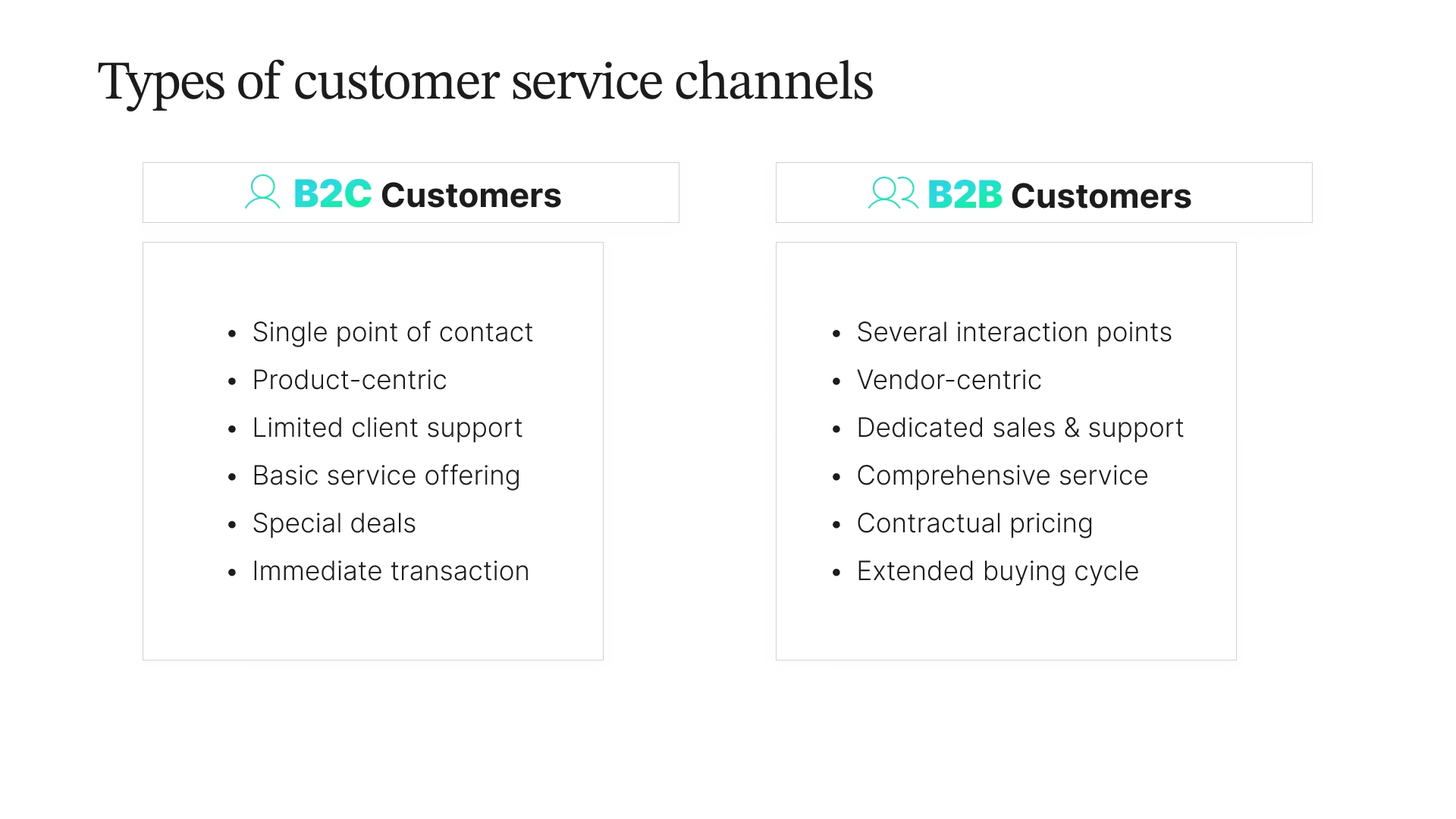
B2B and B2C companies operate with distinct business natures and processes. Their budgets, pricing strategies, expectations in terms of work turnaround, and the types of clientele they engage with differ significantly. B2C companies interact directly with end-users, whereas B2B companies work with suppliers and dealers. Because of these differences, it’s crucial to train your customer support reps in handling B2C and B2B customer relationships with specialized approaches.
Let’s explore the key distinctions between B2B and B2C services.
Revenue dynamics
- B2B service interactions have a profound impact on revenue due to the large volume of purchases and higher lifetime value.
- B2C interactions influence revenue less intensively, focusing on individual end-users.
Interaction nuances
- B2C interactions typically involve single end-users with their private concerns and inquiries.
- B2B customer service may involve multiple contacts from the same company, requiring support to access and manage service history effectively.
Customer relationships
- B2C relationships can be diverse, with a lower repeat rate, challenging standardized relations.
- B2B partnerships involve longer sales cycles, allowing for stronger relationship-building with high-value clients.
8 B2B Customer Service Best Practices for Better CX
Despite offering a multitude of services, a significant number of businesses fail to prioritize top-notch customer service. In today’s demanding market, where people expect better attention and quick answers, excellent CS is what sets businesses apart, especially with high-value contracts and the pressing need to cater to multiple stakeholders. Here are the 8 best B2B customer service best practices to consider:
Prioritize proactive customer service
Being proactive in customer service involves anticipating and addressing buyer needs before they arise. When you clearly understand what your client requires and how they prefer to be supported, you are on the path to success. B2B customer service strategies include using automation for updates and gathering customer feedback to determine areas for improvement.
Use straightforward SLAs for transparent B2B relations
Service Level Agreements (SLAs) are contracts that outline the expected service standards between providers and customers. In B2B, they boost client satisfaction by setting clear service expectations, 98% successful first-call resolutions, or a 24-hour response time for CS inquiries. Effective service level agreements (SLAs) require defined services, realistic metrics, clarity on roles, ongoing monitoring, and regular updates. With SLAs, B2B companies enhance trust, transparency, and user loyalty.
Pay attention to fast response times
If there is anyone who truly dislikes waiting, it is businesses. They have a lot on their plate and are busy focusing on their profitability and their own customers, so they tend to project the same expectations they face from their clients onto their relationships with other companies. This is why, especially in B2B customer service, no one is going to sit on the phone listening to boring hold music for five minutes or more. If the call is not answered within literally ten seconds, the chances of meeting expectations become very low.
Expand B2B self-service for modern buyers
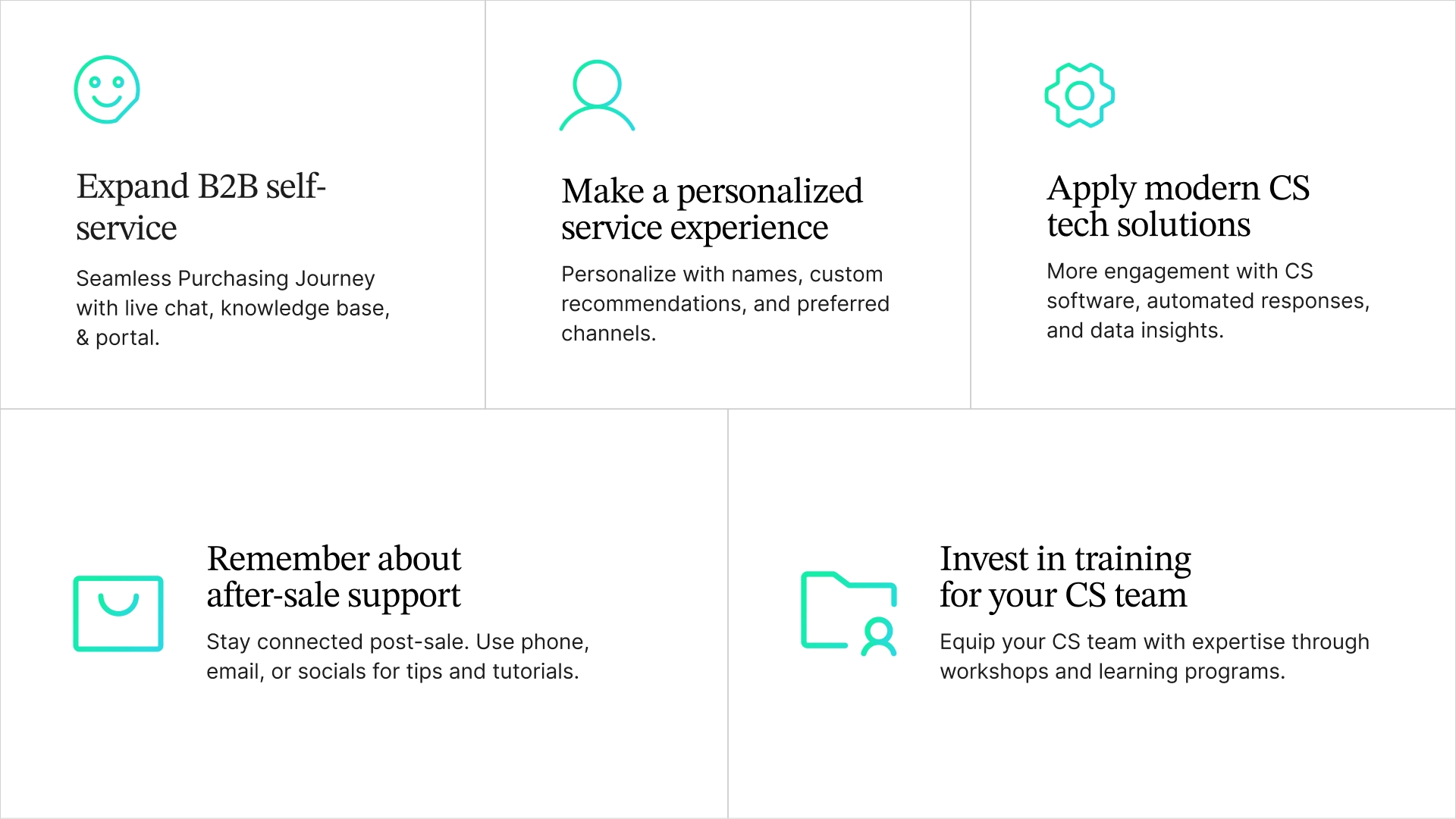
B2B buyers want the convenience familiar to B2C shoppers. For a seamless purchasing journey, companies should offer diverse self-service options like a live chat, online product catalogs, a knowledge base, and customer portal, while ensuring B2B customer service teams are prepared for complex issues. This B2B customer service model brings efficiency and boosts customer contentment.
Make your B2B customer service experience personalized
Today’s clients expect personalized experiences when engaging with businesses. By tailoring the customer journey, businesses not only drive deeper relationships but also boost satisfaction, loyalty, and sales. Personalization, such as using a customer’s name, sending targeted emails, offering tailored recommendations, and providing service through preferred channels, makes clients feel valued and understood. Enhancing this approach with the use of a personalized B2B website, customized to meet individual client needs, further strengthens the customer experience. Following a more personalized approach shows a company’s dedication to addressing unique consumer needs and incorporates effective sales strategies that leverage customer data and preferences to recommend relevant products or services, ultimately increasing conversion rates and driving sales growth.
Apply modern customer service tech solutions
And today, it is hardly possible for anyone to operate effectively without technology, because automation not only makes life easier, it provides a competitive edge that nothing else can. There is a wide range of customer retention software solutions designed to make service faster and more efficient. On top of that, in B2B customer service, AI tools are now being actively used, and these innovations are developing at an incredible pace. If we talk about reducing, for example, the time it takes to process a request, AI chatbots or voice AI come into play, allowing customers to find answers on their own through an AI-powered knowledge base. Automation is also extremely effective when it comes to quality assurance. AI QA performs these tasks much faster than manual reviews and with far greater accuracy. There are also additional tools, such as AI Accent Neutralization, where customers do not even feel that they are speaking with a non-native speaker, and AI Background Noise Cancellation, which creates a clean, distraction-free call environment. The range of AI tools available today is so vast that the real challenge is not where to find them, but which ones to choose.
Remember about after-sales support
Once you acquire a new client, it would be a major mistake to forget about them right away. That’s simply not how retention works. But we are not talking about bothering them with intrusive calls or constantly asking for feedback. Quite the opposite. What we mean here is care. Taking the time to understand what their experience has been like, how the service feels from their perspective, what could be improved, and how you can further support them to make the solution more effective. It also means expanding the number of touchpoints in ways that are convenient for the client. In reality, there are many strategies boost retention that can be implemented, and they should be tested and adapted to find what works best for each individual client.
Invest in training for your customer service team
Make sure your customer service reps are well-trained not only in your product or service but also in soft skills like communication, empathy, and active listening. To stimulate effective interactions, they must understand business needs and state long-term benefits. It’s crucial to train them in both soft and hard skills, covering industry knowledge, company values, and product expertise. Workshops on behavioral skills and problem-solving are also essential. At the end of the day, strategic investment in employee development brings you profit.
3 Inspiring Examples of B2B Customer Service Done Right
B2B companies need to get better in six main areas to provide exceptional customer service: commitment, doing what they promise, making things smooth for customers, responding quickly, staying a step ahead, and constantly improving. Building a B2B portal can help in this. It can offer tools like self-help options, a knowledge base, chatbots, and ways for customers to personalize their experience. At Helpware, we’ve worked with over 200 companies, helping them achieve this and more. We have plenty of real-life stories and results to share.
Enhanced cybersecurity solutions with stellar B2B services
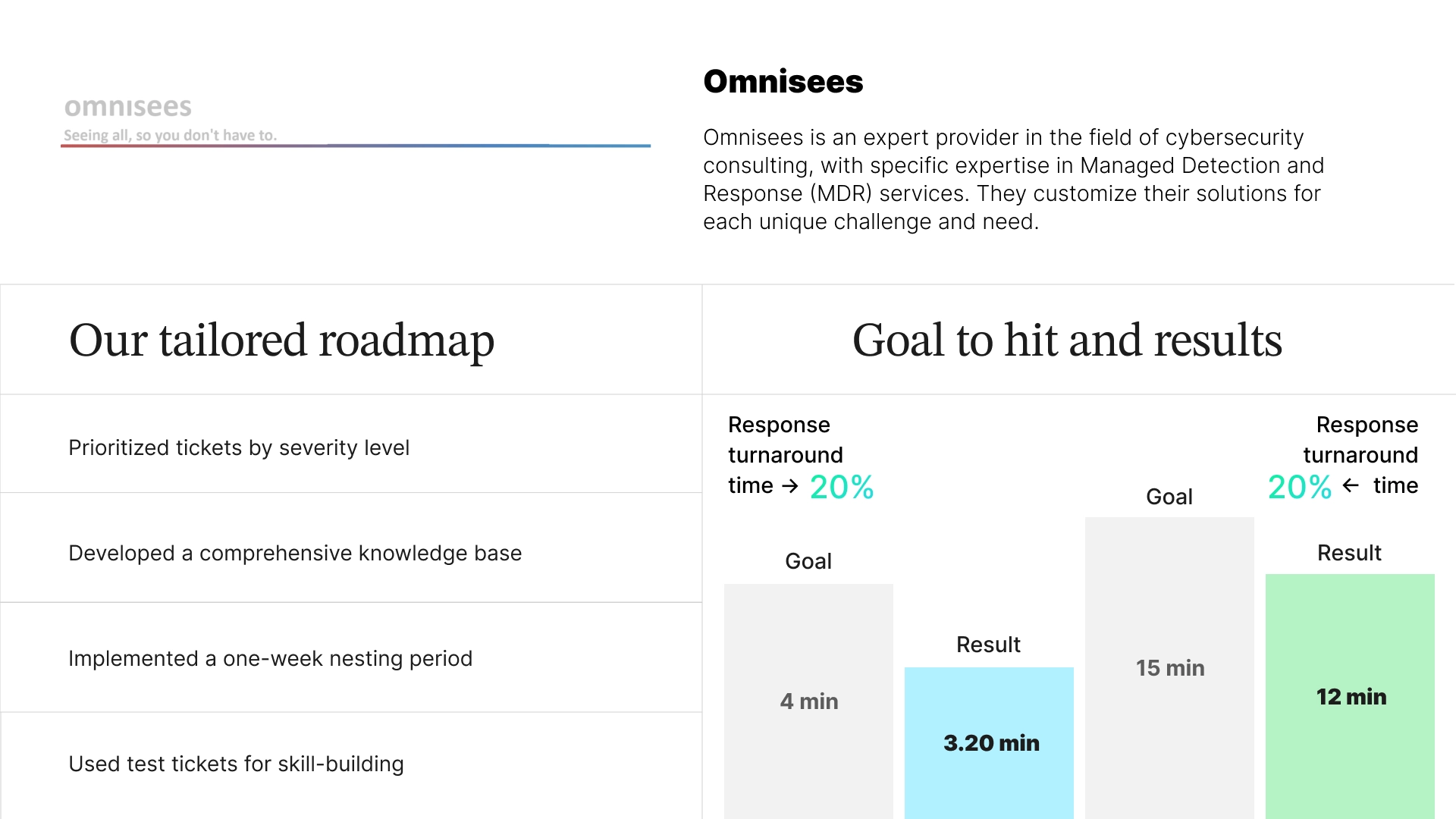
Omnisees stands out as a specialist in cybersecurity consulting, especially renowned for its Managed Detection and Response (MDR) services. The company customizes its offerings to address specific cybersecurity challenges.
Omnisees partnered Helpware for round-the-clock remote incident monitoring to ensure uninterrupted operations. They also aimed to enhance their customer service capabilities. So, the Client outsourced a dedicated team of 6 Cyber Security Analysts to deliver efficient ticket responses and 24/7 remote incident supervision.
The partnership yielded great results: response times dropped to 3.20 minutes, beating the target by 20%, and resolution times hit 12 minutes. Such improvements not only strengthened the Client’s cybersecurity but also enhanced the value they offered to their clients.
Collaborative success in digital marketing
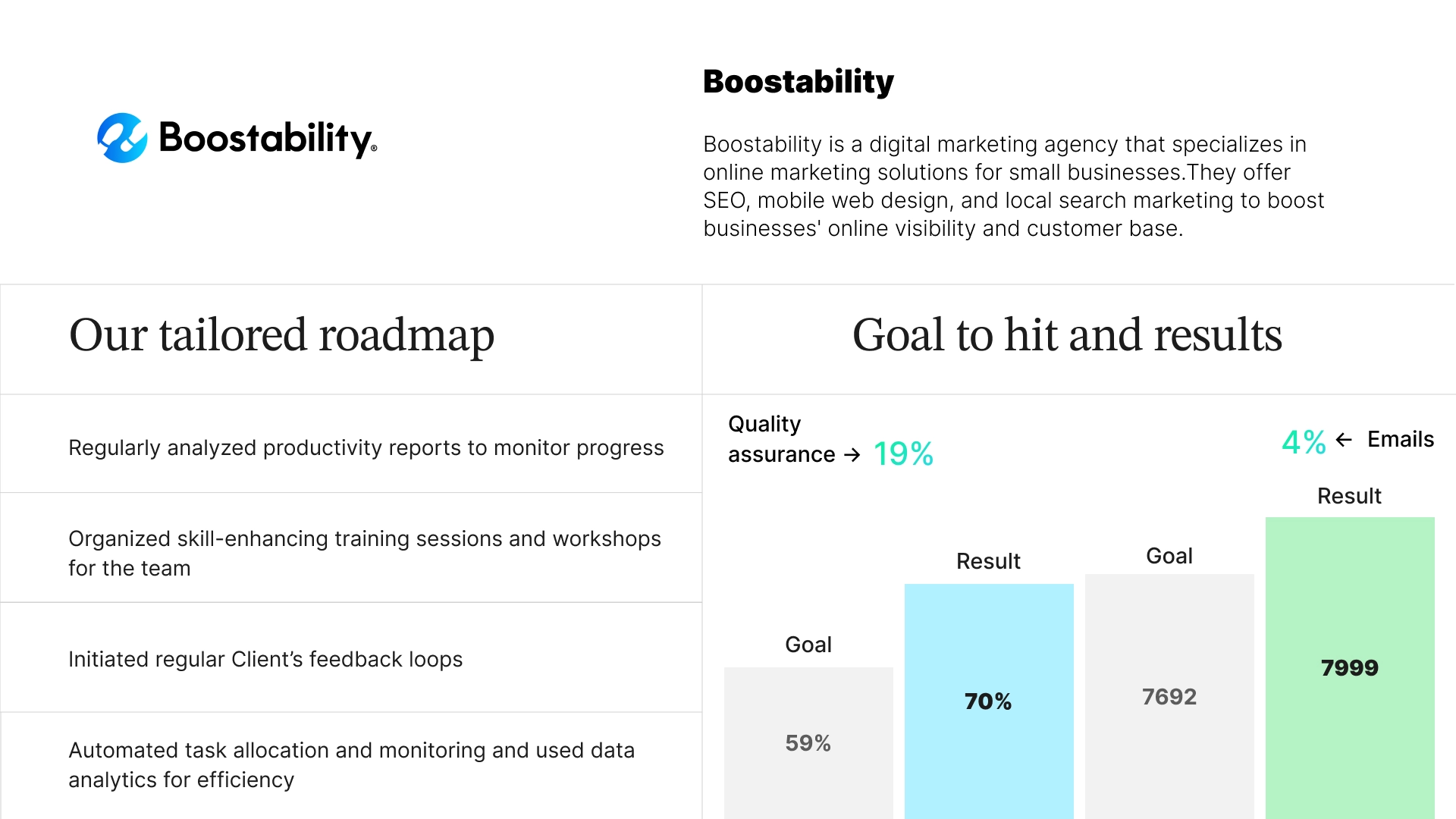
Boostability is a global leader in digital marketing and focuses on online marketing solutions crafted for small businesses. They do SEO, mobile web design, and local search marketing for SMBs striving to achieve online success.
To elevate the Client’s customer service in B2B, Helpware implemented ongoing productivity checks, training sessions to upskill the team, client feedback systems, and utilized automation and data analytics for effective operations. The Client’s primary objectives were to elevate their Quality Assurance (QA) rate and achieve better task targets with the help of Helpware’s dedicated team of copywriters. Our solutions significantly improved QA standards and exceeded task objectives. Working on this project, we showed how powerful the collaborative expertise and tailored B2B customer service can be in terms of achieving business goals.
Improved CS services in the healthcare industry
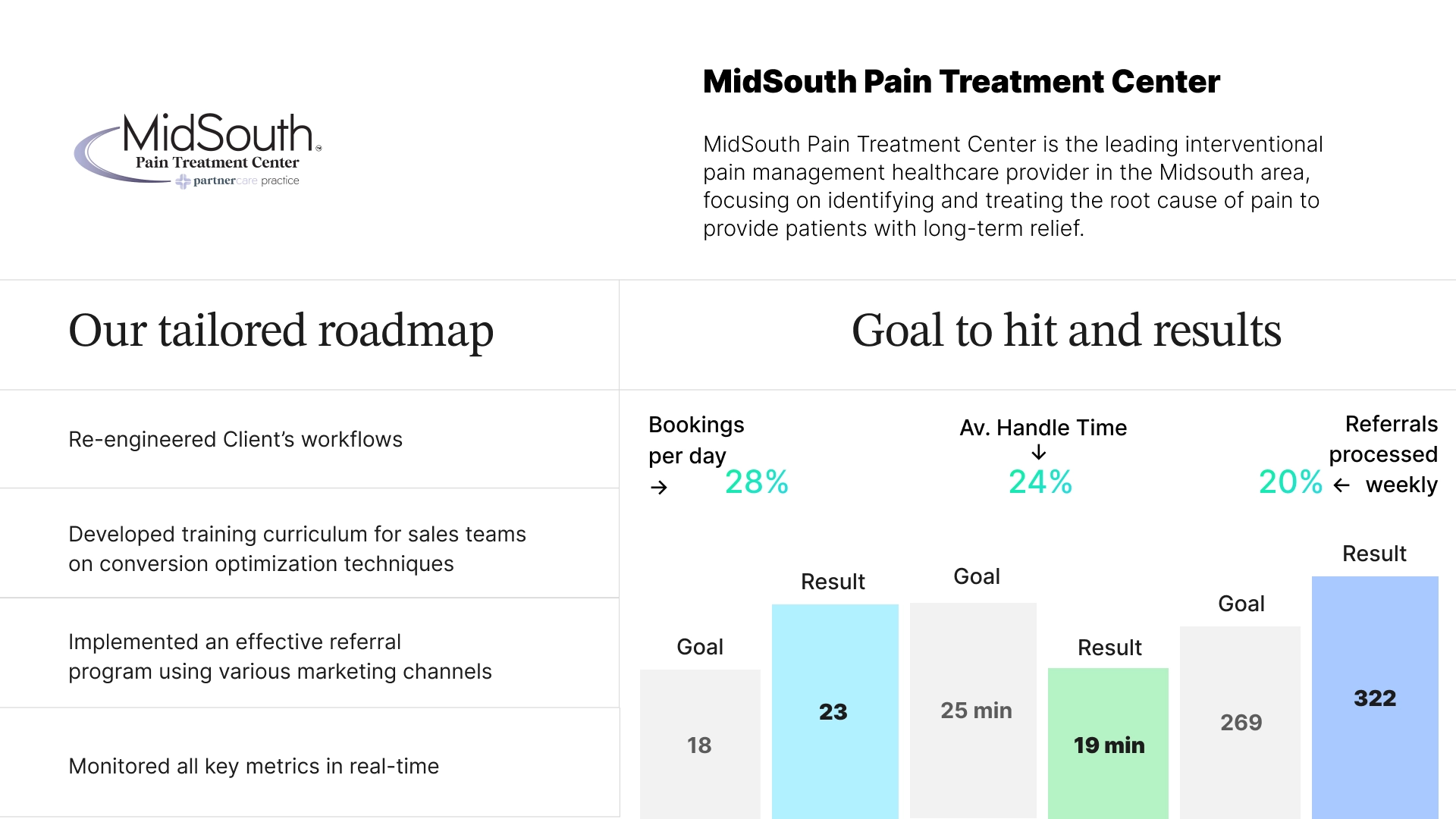
Our Client, Midsouth Pain Treatment Center, is the leading US interventional pain management provider. Their clients appreciate them for their unmatched customer service and commitment to top-tier care.
As their patient base grew, they required more Customer Service Representatives (CSRs) who could adeptly manage patient interactions and back-office tasks, especially appointment setting. The objective was twofold: to ensure prompt, accurate communication with patients and to maintain impeccable data accuracy in the centralized database.
Our key strategy was to prioritize comprehensive training, ensuring our teams are equipped with vital skills, while also using visual process documentation to identify and fix bottlenecks. We integrated AI automation and advanced reporting to provide more time for the core team to focus on their value-driven tasks.
The outcomes were stellar. Daily bookings stood at 23, surpassing targets by 27.78%. AHT was reduced to 19 minutes, exceeding expectations by 24%. Weekly referrals processed amounted to 322, a commendable 19.7% above the target. Through this partnership, the Client not only refined their B2B customer service in the healthcare realm but also witnessed quantifiable improvements in operational efficiency.
We implemented the most effective B2B customer service best practices, catering not just to the customers’ current needs but also to their evolving future requirements.
Craft Superior B2B Customer Service with Helpware
In the complicated ecosystem of business-to-business relationships, the quality of customer service is more than just a metric; it’s a differentiator that drives loyalty, referrals, and revenue. Helpware has been at the forefront of transforming how businesses serve and support each other for over 10 years. With our depth and breadth of experience in diverse niches, we’ve been the driving force for countless success stories.
We work in 19 countries, which enables us to provide a service on a global level with an understanding of local nuances. This vast footprint is not merely about numbers, but about the capability to deliver top-notch B2B customer service.
We know that businesses are not just seeking a service provider but a partner that will help them realize their vision, make their clients happier, build loyalty, and, ultimately, amplify their revenue. As the market becomes even more demanding, the role of robust customer service in B2B will intensify. We are ready, with our expertise, to be the partner for businesses in all industries. Contact us for more details!